by brentpix
|
Comments Off on PHO 703- Week 5 Publication
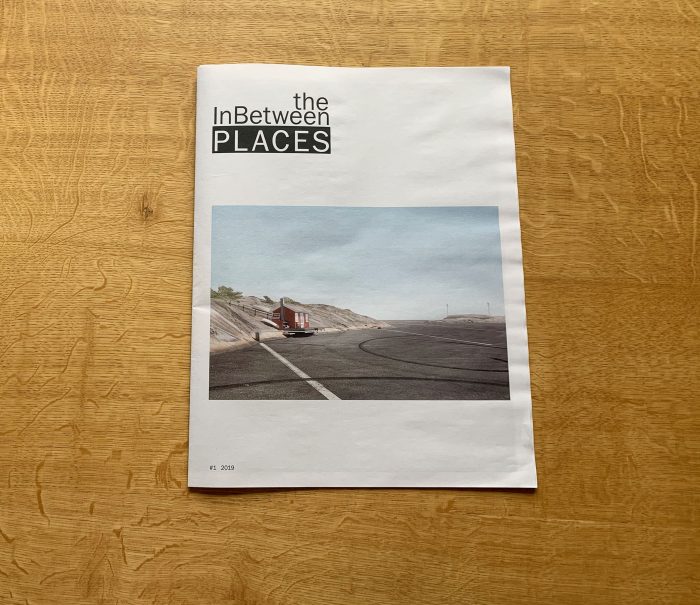
For this activity, we have been asked to create a ‘dummy’ publication that relates to our FMP project. A draft version in full.
Whereas an exhibition operates in a specific space and towards an intended audience for a limited period of time, a publication offers a viewer an opportunity to live with a collection of images, to take them home and develop a relationship with them over months and years. A publication therefore offers a very different experience of your work.
Printing my images out and laying them on the floor it soon became obvious that 8 images (at that point) was never going to make much of a book, bringing a couple of experimental images in helped but they were the wrong shape to sit alongside the successful executions.
So clearly something more short form would be needed, something better than a leaflet for sure, a medium that could show the images to a decent size but also being by default an interim step as at least half of the images do not exist this stage, it still needed to be versatile as something that could still stand up when the collection was complete.
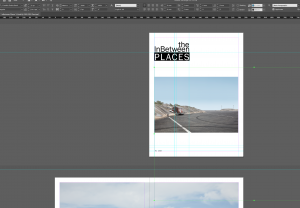
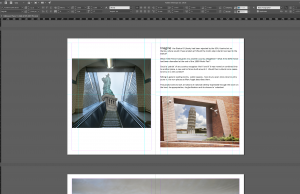
So taking to InDesign using my self taught and basic skills I started to lay the images down into potential pages.
In the event the images they didnt conform to the standard became useful providing an area to add a little descriptive text explaining the project, making the images work for the covers was a concern but in the event they worked well, although I prefer the DPS versions in terms of overall image size.
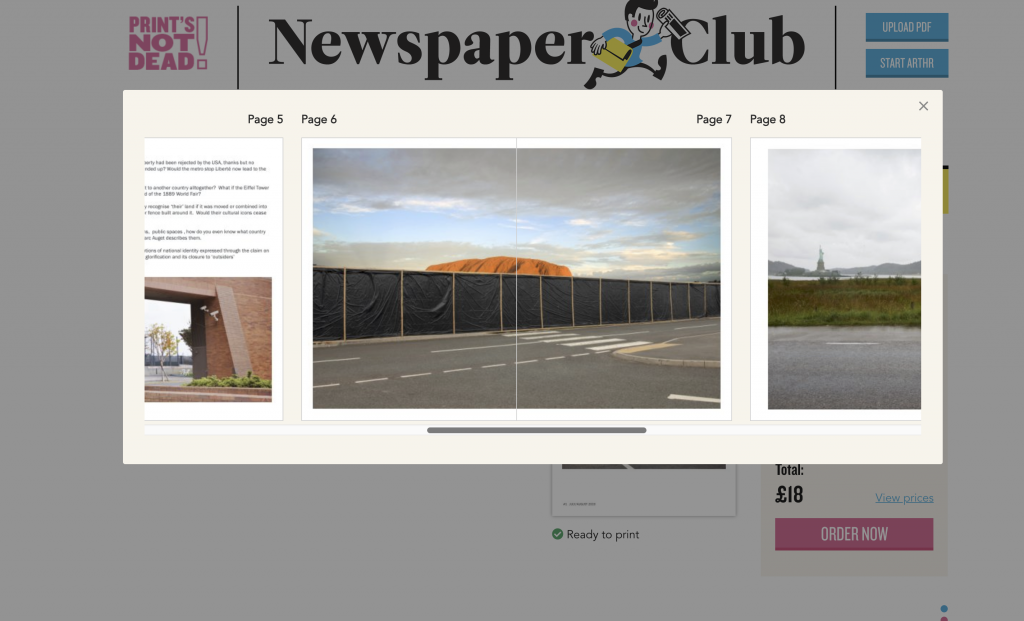
I was already aware of Newspaper club and thought this relatively low cost print solution may work well for what was by now a teaser publication, I knew the print quality would be far from the perfection I would expect for a book but in this instance, since there is a subtle ‘news’ element to the images in the case of the alternate histories it may actually add a quality that helps the image delivery.
So having settled on a design I uploaded my PDF to the Newspaper Club site, the process is very easy and will warn you about print in margins and that kind of error.
The final Newspaper I set at standard tabloid size and stock, heres a short video. Overall I’m very pleased with it, given my rudimentary design skills and the limitations of newsprint the whole thing stands up well. The medium of the tabloid stock and newsprint has indeed added its own qukaity, in this instance a certain authenticity which was most unexpected.
Photobook or publication?
For this stage of the project the newsprint format has proved to be very successful, I’m very pleased but for the final form I still feel a quality photobook would be better but never say never, this process has enabled me to view the works in a totally different way, I like the ‘news’ aesthetic, maybe this needs to be retained, maybe the final works follow a similar route, and are printed as billboard posters rather than archival museum prints as I originally envisaged?
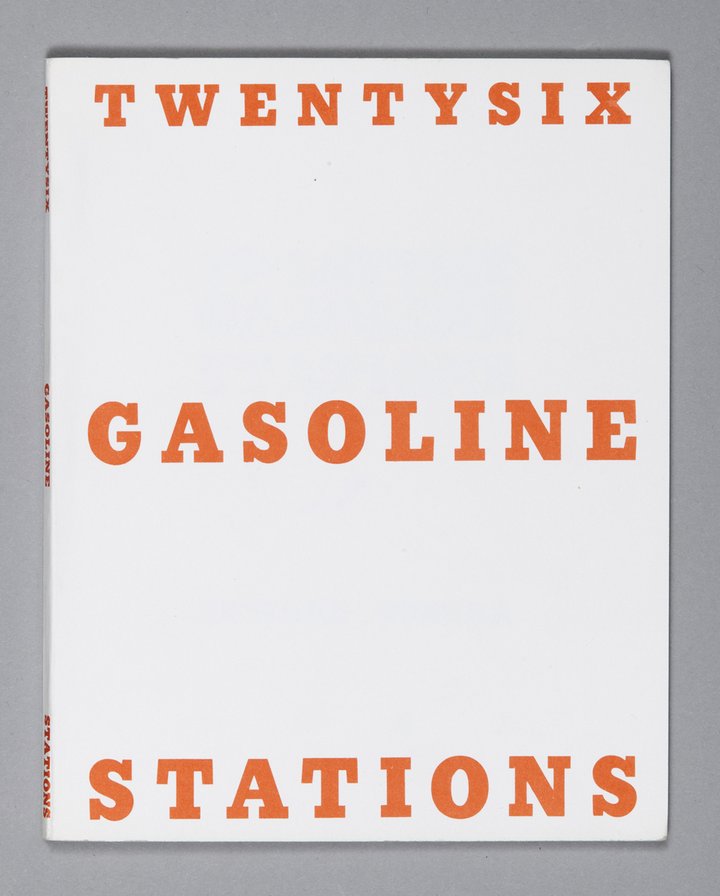
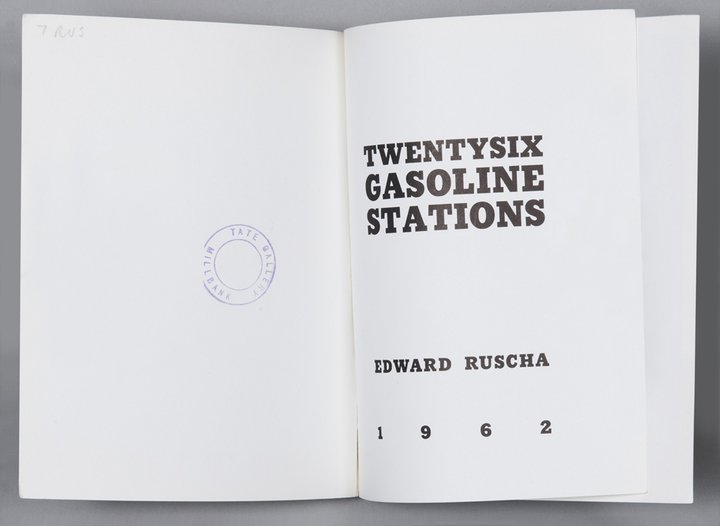
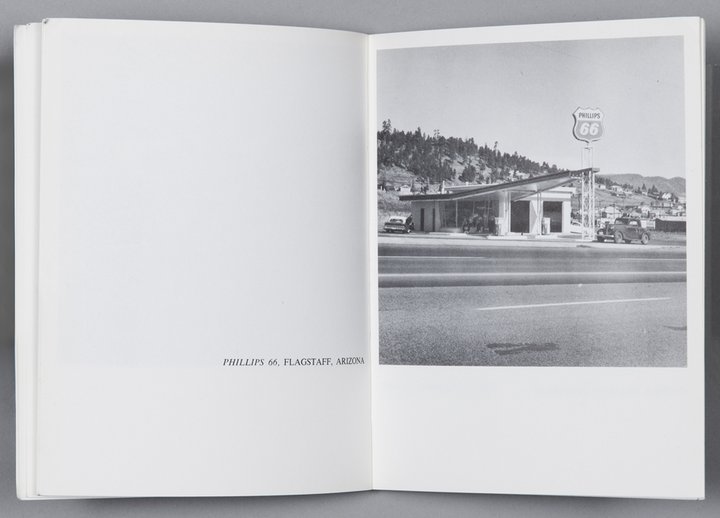
Ed Ruscha used short form publications very successfully. Notably in his 1962 publication 26 gas stations considered seminal in the history of artist books.
Johanna Drucker, writer, critic and book artist, observed:
“Thirty years later, with a quarter of a century of mainstream art world activity between, the aspect of shock-effect and humour has diminished somewhat. But in 1962 this work read against the photographic landscape of highly aestheticised image-making work which carried photography’s claims to art status forward on the double engines of fine at imagery and/or humanistic critical vision (the Edward Weston, Ansel Adams tradition on the one hand and the Dorothea Lange, Walker Evans tradition on the other)”
Ruscha supervised the design and printing of the book himself, in an interview in 1973 he said,
‘I’d always wanted to make a book of some kind. When I was in Oklahoma I got a brainstorm in the middle of the night to do this little book called Twentysix Gasoline Stations. I knew the title. I knew it would be photographs of twenty-six gasoline stations.’
Also,
‘Months went into the planning of that. I could have saved myself a lot of trouble by loosening up. You know, not gotten so concerned with how I wanted the thing to look. I changed the form about fifty times at the printers”
by brentpix
|
Comments Off on PHO 703- Week 4: Strategies of Freedom- Reflection
So this week has been fascinating, all very relevant to my own FMP even if I didnt realise it initially.
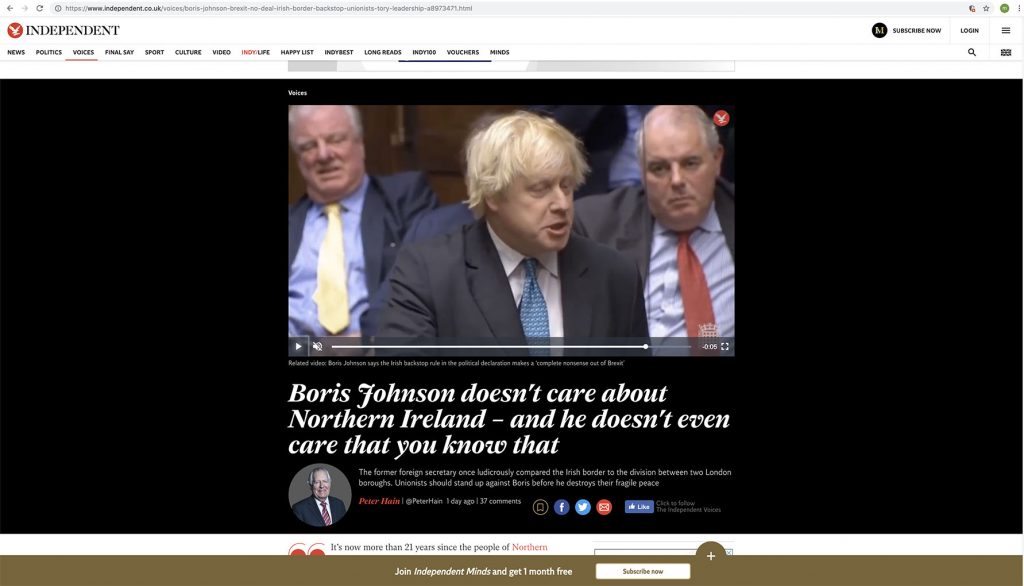
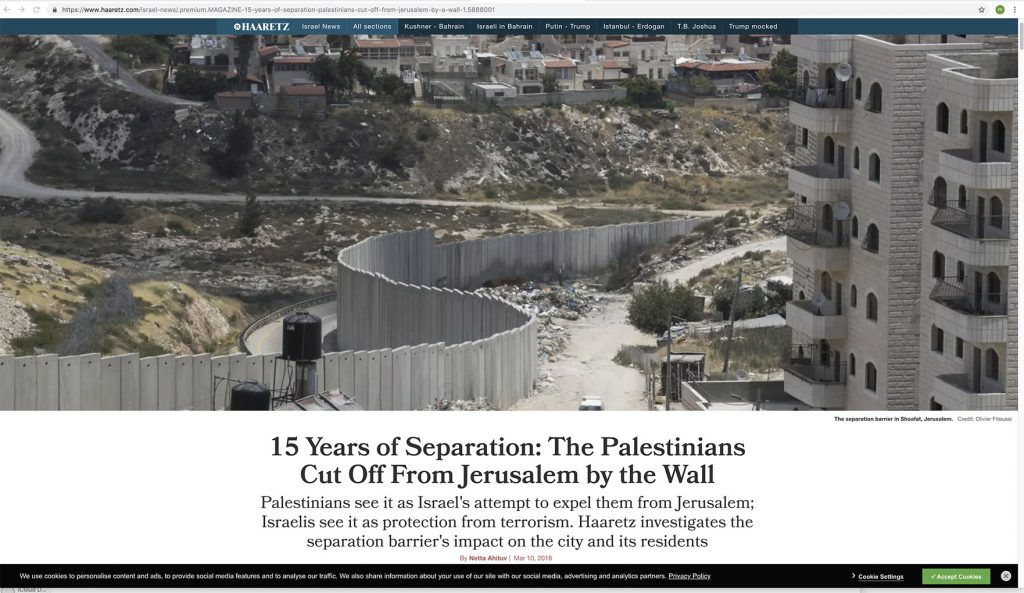
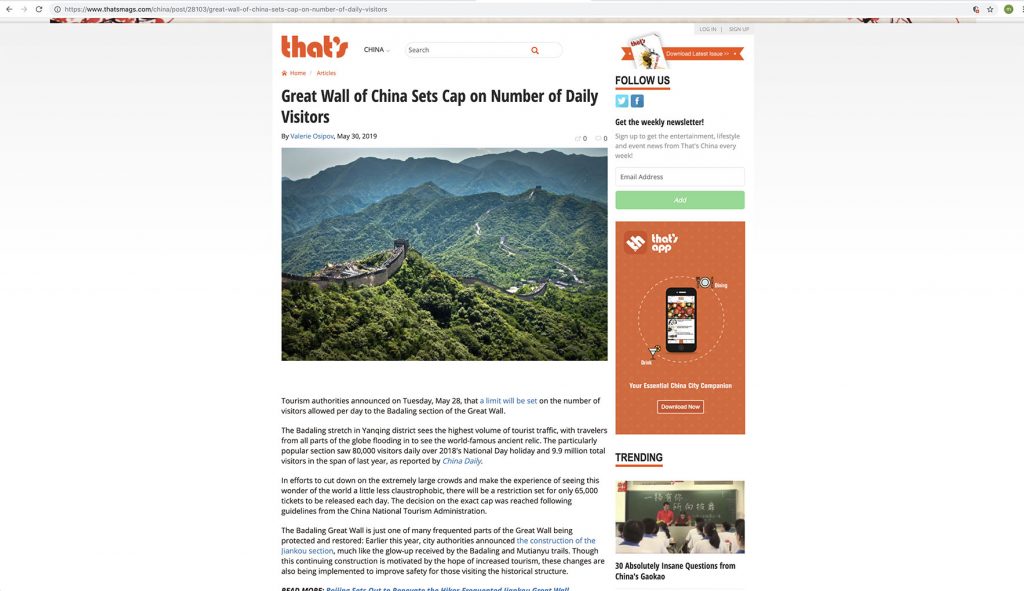
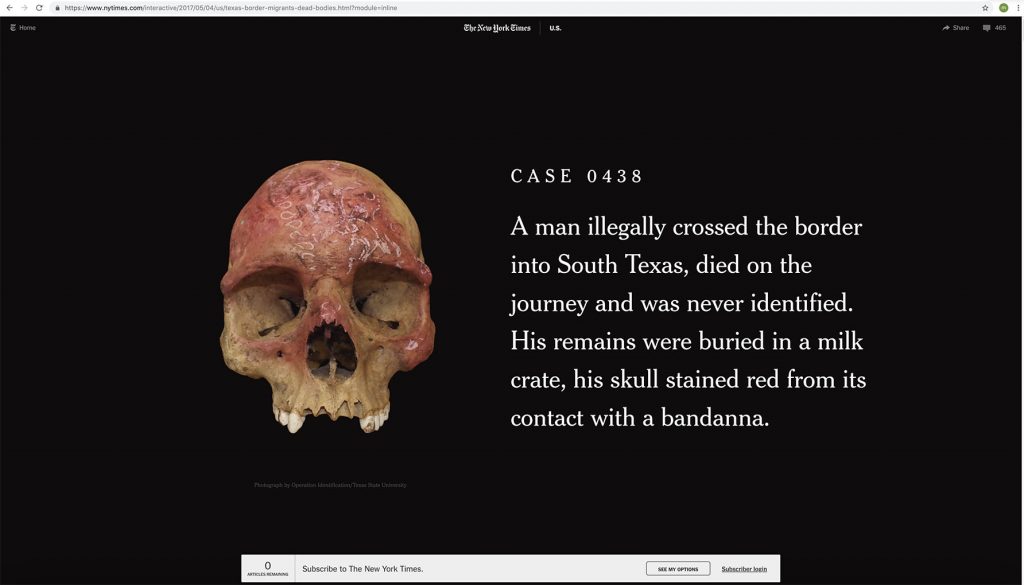
Ive already written a short piece about how I approached the ‘hands off’ activity, essentially using a Google news search using the words, Trump, Border, Wall, Brexit to generate web pages and then screen capture them to create stand alone pieces.
The images created are interesting, theyre not entirely machine generated as the web pages are designed and populated by humans but I only know they exist because Google alogrithm decided to show me what it thought I wanted to see and then I used the screen capture facility in Mac OS to create a still image of the portions I wanted to see.
What I didnt expect was how the stories I machine gathered would make me feel and just how monumentally relevant the images and stories are to my FMP. The irony that the machine has delivered pure emotion and also interpreted the search terms into actual hard news and more esoteric stories is very interesting.
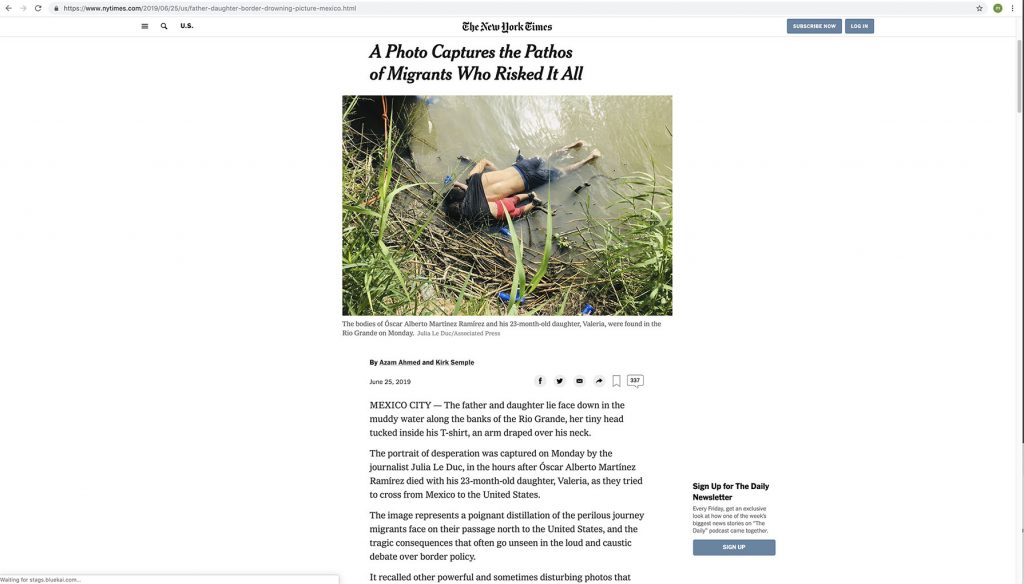
New York Times. The bodies of Óscar Alberto Martínez Ramírez and his 23-month-old daughter, Valeria. Julia Le Duc/Associated Press
The suggestion was made that I incorporate the stories alongside the main images by Effie which is brilliant and Laura suggested I look at layering the frames, very much as one might when having multiple windows open on a desktop.
This is a breakthrough moment for my project. It doesnt alter the core methodology but it gives the project greater depth, it has shifted its target a little though as essentially poking fun and ridiculing those obsessed with the imaginary lines that denote ‘their’ land to a more human level where we see the results of the these borders and walls, what the walls can in time become, how their usefulness becomes diminished and in the case of he Great Wall Of China how the barrier itsef now needs protection from the people it was originally intended to protect, then contain albeit a political wall once known as the Bamboo Curtain.
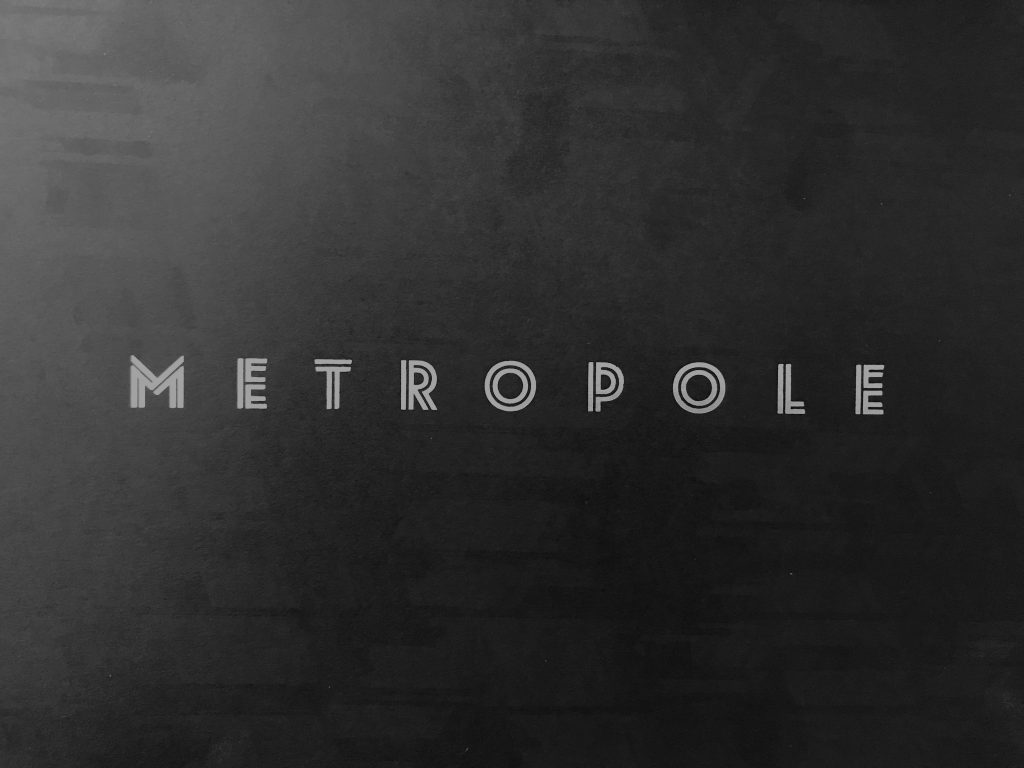
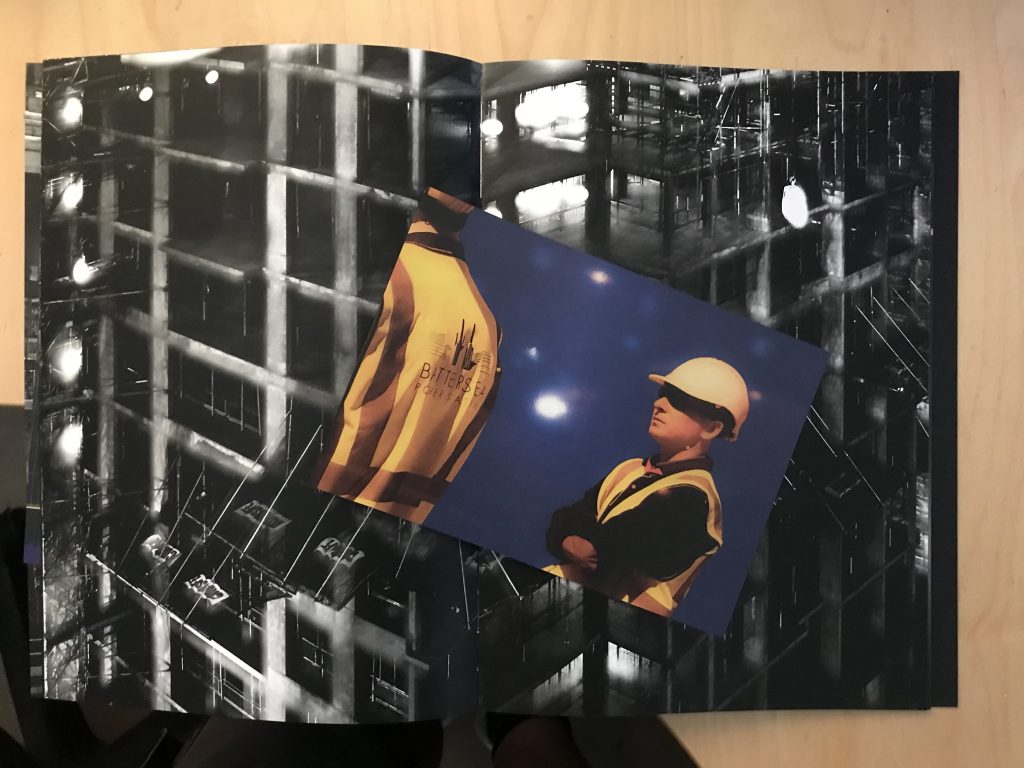
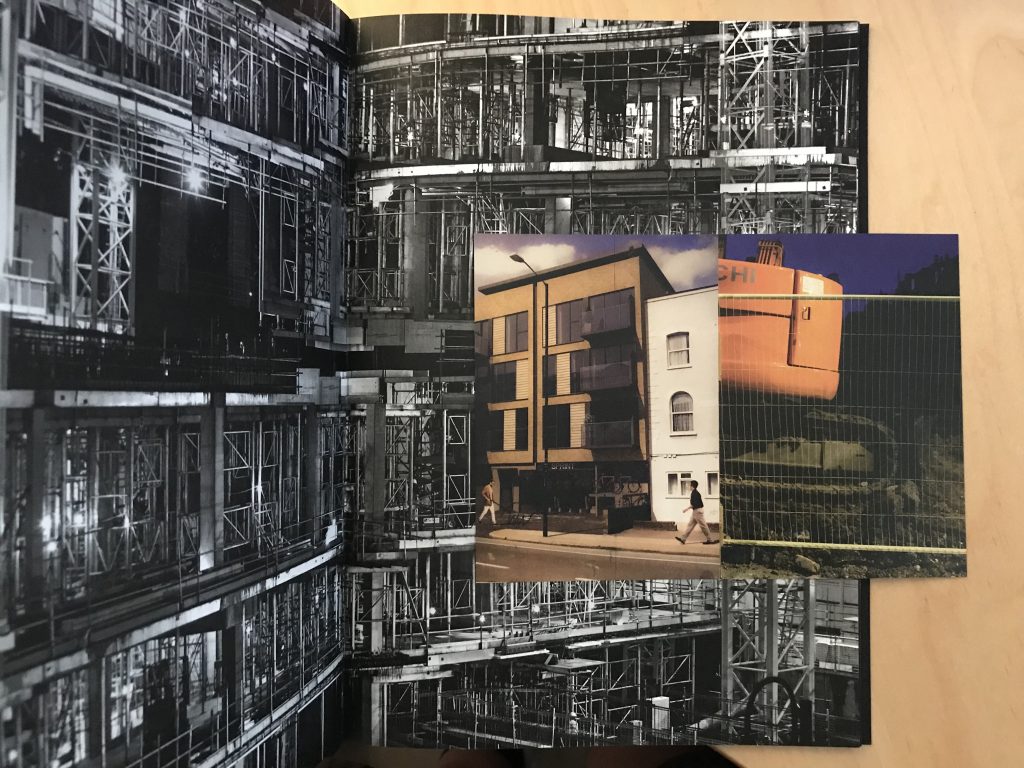
Moving forwards i’m not 100% how the new image elements will be shown, as a physical item or electronically maybe. In book form I have to consider how I might intersperse these mages amongst the main body of work. They may work well as loose form images slipped into the book in the same way as Lewis Bush has done with his Metropole where he’s appropriate imagery from property development marketing material.
Lewis Bush, Metropole 2018 Overlapse
Lewis Bush, Metropole 2018 Overlapse
So all in all a great week, heaps of interesting things to explore further, was particularly interested in the work of Jenny Odell and her Travel By Approximation virtual road trip, Crossing borders without even going there. Maybe another route forward or to explore.
Travel by Approximation: A Virtual Road Trip 2010. Jenny Odell
by brentpix
|
Comments Off on PHO 703- Week 4: Strategies of Freedom Hands Off Task
This was this weeks task which asked us to reconsider our relationship with our preferred apparatus by NOT using it.
Having 24 hours to produce a mini-series of five images relating to our research projects, without using apparatus that is familiar to you.
All images must be produced on Wednesday 26th June between 00:00am and 23:59 (local time).
Without using apparatus familiar to me?
My first thoughts were entirely mechanical, cameras, types of cameras, that led into processes and types of processes. A small pile of vintage polaroid and other stocks came out of the freezer. Then I realised I was missing the point and they all went back in again. Its not the gear or the film or the means of capture its the image, the story, its so easy to start thinking about the means of capture first when we should be thinking about the image or story.
Ive never appropriated imagery and Ive never used screen grabs or downloaded images as a means of creating a final image beyond illustrating an academic doc so this is totally alien to me as a means of capture.
My project is concerned with artificial borders and notions of nation state and identity so I thought of a few keywords, Border, Trump, Wall, Frontiers to see what they generated as a search selecting the news option for Google and then screen grabbing the first five.
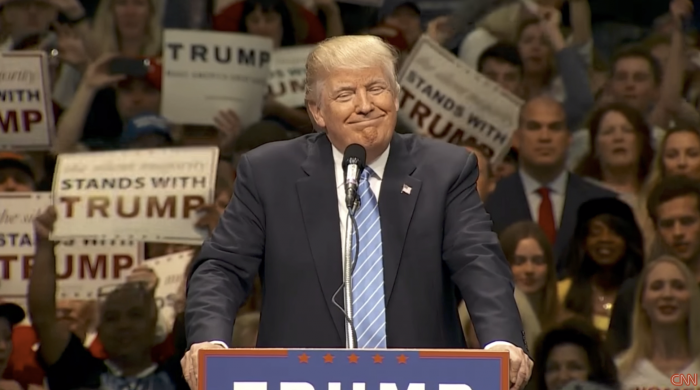
In the event I ended up with far more than five but it was interesting what stories emerged, Many showing great tragedy and suffering as in the father and daughter who drowned in the Rio Grande this week after the bridge to the frontier was blocked. ironically the next a story about the kind of meaningless blustering politics that leads to some of this tragedy. The next story about a wall intended to keep a population contained in a kind of ghetto built by the relatives of some people who dies in ghettos themselves. Then as a weird juxtaposition, a story about the great wall of China now under threat from mass tourism and needing its own barrier to limit tourist numbers. Finally a story about 200 migrants who died alone crossing into South Texas from Mexico, their identity unknown. The ‘border’ they attempted to cross being the desert and more than anything else erected economically.
So the images are what they are, screen grabs using the Mac, easy to do, shift, command 4 but something Ive never done to create a ‘final’ image. Its also made me look at the web pages captured differently too. Looking at them as a still image, their functionality removed they become objects in their own right, I decided to retain the browser address bar but allow the story to trail out of the image indicating there was more to see.
The screen grabs frame imposing its own border as to what part of the article it allows access to.
It would be interesting to experiment with abstracting these images to see how much of the overall screen image could be removed before the news value of the article was lost.
The bodies of Óscar Alberto Martínez Ramírez and his 23-month-old daughter, Valeria, were found in the Rio Grande on Monday.Credit Julia Le Duc/Associated Press
Peter Hain The Guardian. Boris talks more crap.
Haaretz , Netta Ahituv, Photo Olivier Fitoussi – 15 years of the ‘Separation Wall’ in Jerusalem
Thats China, Valerie Osipov, photo David Almeida, Flikr. The Great Wall needs protection.
A Path to America, Marked by More and More Bodies , MANNY FERNANDEZ MAY 4, 2017. Photographs by GEORGE ETHEREDG
by brentpix
|
Comments Off on PHO 703 Week 2: Week 2: Strategies of Mediation Reflection
I didnt think I was going to be able to make a contribution to this one but a little breakthrough last week reached during the Webinar with Laura sewed the seeds to break my psychological impasse.
Nothing but appropriated materials, only the second time ive done this now but I think its valid. I’m also not sure what form or even what images will make the final project, I think I know but I didnt want to start trailing images that may never see the light of day as part of the FMP so how do you trail work you havent made or dont want to share as yet?
Its basic, my titles could be way better and i’ll try to finesse it further but I think it says what I want it to.
by brentpix
|
Comments Off on PHO 703 Week 1: Strategies of Looking- Activity Looking Back
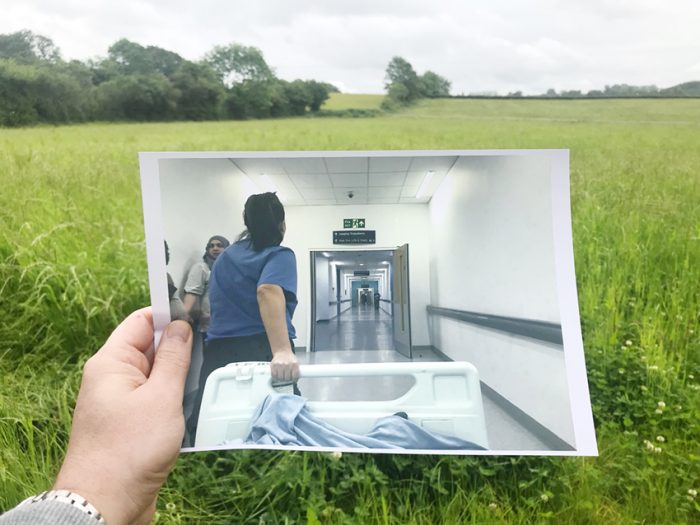
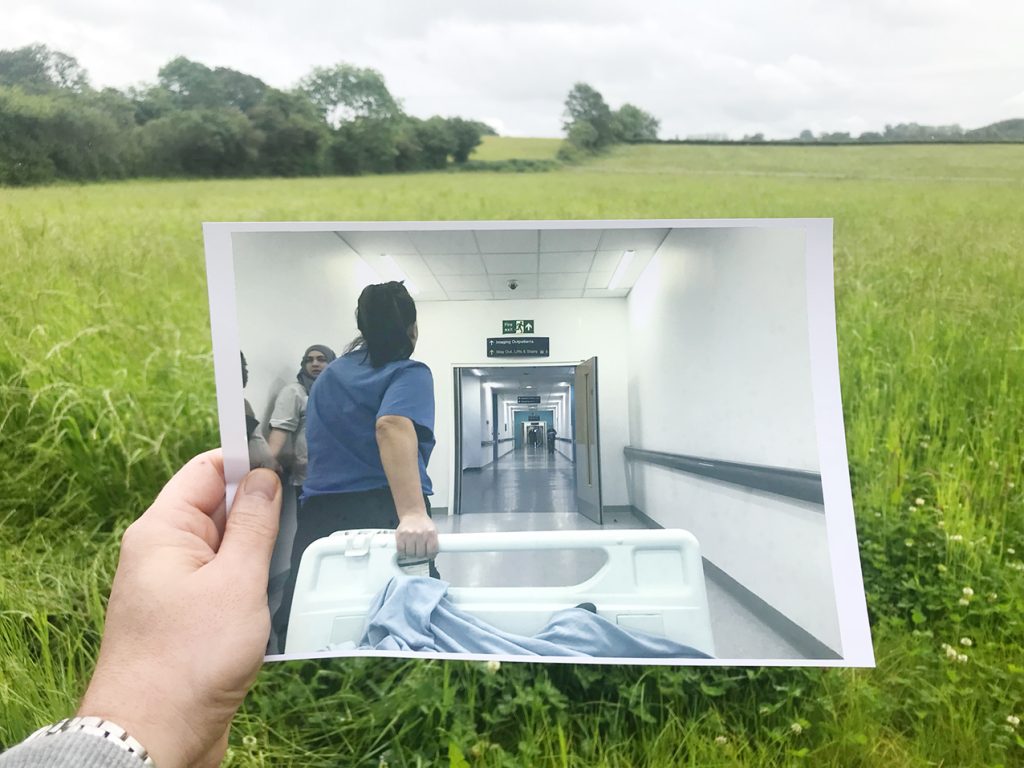
Finding myself ill and then unexpectedly stuck in Hospital with sepsis over Easter all my plans went out of the window. A sudden and unexpected wrench and total reframing of my life, albeit temporarily (all being well)
The Ruscha book project was sadly out of the question but the the old photo brief had caught my imagination and given my limited scope I thought I might be a little cheeky and subvert it slightly by taking photos of my new views, yes to keep my sanity I took my Iphone everywhere in the hospital, I cant even remember some of it looking back at some of the images now but what I do remember is documenting a little trip from my room for a CT scan where I appeared to be being wheeled around the entire hospital in my bed wondering how the hell I got there and really wishing I was in the field at the back of my home, the field is nice, its not my absolute favourite place though, lots of places are far nicer but this is where I generally go to have a think or where I wander to almost unconsciously when I’m on the phone. At that moment though it was home and id have dne anything to have jumped off that bed and ran back there.
It is of course now an old photo, so im not cheating! Its a memory, albeit a recent one but one that is very strong and will stay with me, it certainly wasnt the worst part of my stay, it was just all a bit surreal, it was like watching TV but realising I was the show. Anyway enough waffle, heres the photo.. in the photo.
by brentpix
|
Comments Off on PHO 702 Work In Progress FMP
The nature of the images for this project means that whilst I am shooting large volumes of donor images final or experimental tableaus will not be numerous.
Also I am finding whilst I have the start of many potential constructs the completion images may be some way off and will not be obtained until more trips have been completed images. Due to unexpected illness a trip to Japan had to be abandoned, hopefully I will be able to rearrange this for later in 2019 or early 2020.
The experimental images have proven interesting, Metro City in particular but I dont think theyre right for The Inbetween Places but I see another project forming which will allow me to push into a more surreal zone. Alternate narratives have also revealed themselves as a result of this experimentation, rewriting world history wasnt something Id even contemplated at the beginning.
Maintaining a sense of the vernacular was important to Inbetween Places and remains so. They have to be accepted as real by viewers but allowing a departure to occur from the laws of physics is really quite emancipating.
by brentpix
|
Comments Off on PHO 702 Week 10: Reflecting on Practice? Independent Reflection
The final week of Informing contexts and wow what a journey! Its been interesting, enlightening, confusing at times but Ive enjoyed it and I do feel like im in a much better place to evaluate and place my own work now as well as images I see elsewhere.
As a final exercise we have been asked to choose one image from our current practice you feel is successful and why you think it is and also one image from your current practice is less successful, again why.
Finally discuss current plans for developing practice.
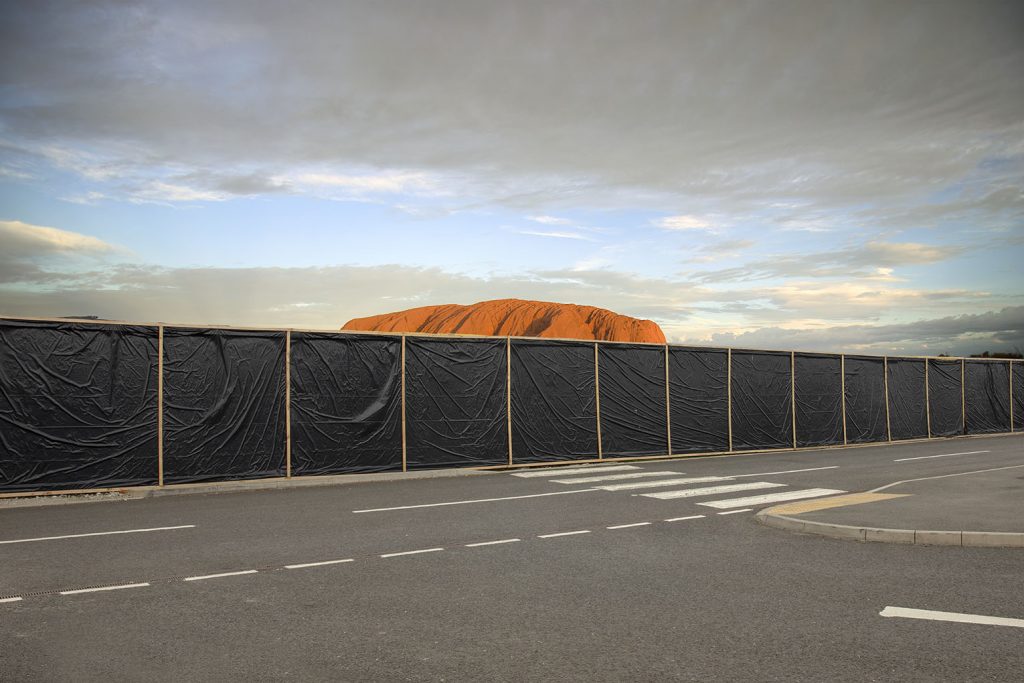
2019 Martin Brent Uluru Services
So starting with an image I feel has been successful this is an image made for my FMP The In Between Places.
Having relocated man made objects and cultural icons I then considered what natural objects were very recognisable and of great cultural significance. A few came to mind, Mount Fuji, sacred and on my list to shoot, The Matterhorn, no so culturally significant but recognisable, Everest, im not sure anyone knows what it looks like?? Uluru, sacred to its Aboriginal owners and very recognisable.
For foreground I wanted to use the blandest, most functional and sterile place I could find in England which I found as a combination of Gloucester and Cornwall Services from the UK. Cornwall services having the benefit of a bizarre polythene clad fence which works on many levels.
I want to remind viewers that the true owners of the site were taken away from it, prevented from returning and totally disrespected. Renamed Ayers Rock, Uluru, its true name, became a tourists play thing for many years until it was returned to the Anangu people in 1985 but even then on condition they leased it back to the government for years.
I tried a few versions, my preferred shown here, I like its simplicity, very few elements. It was important that the foreground almost obliterating Uluru was the UK as it was at the hands of the British the indigenous population suffered and were also obliterated from sight.
This image is also successful as it also has a sense of the uncanny that I was particularly keen to inject into these tableaus.
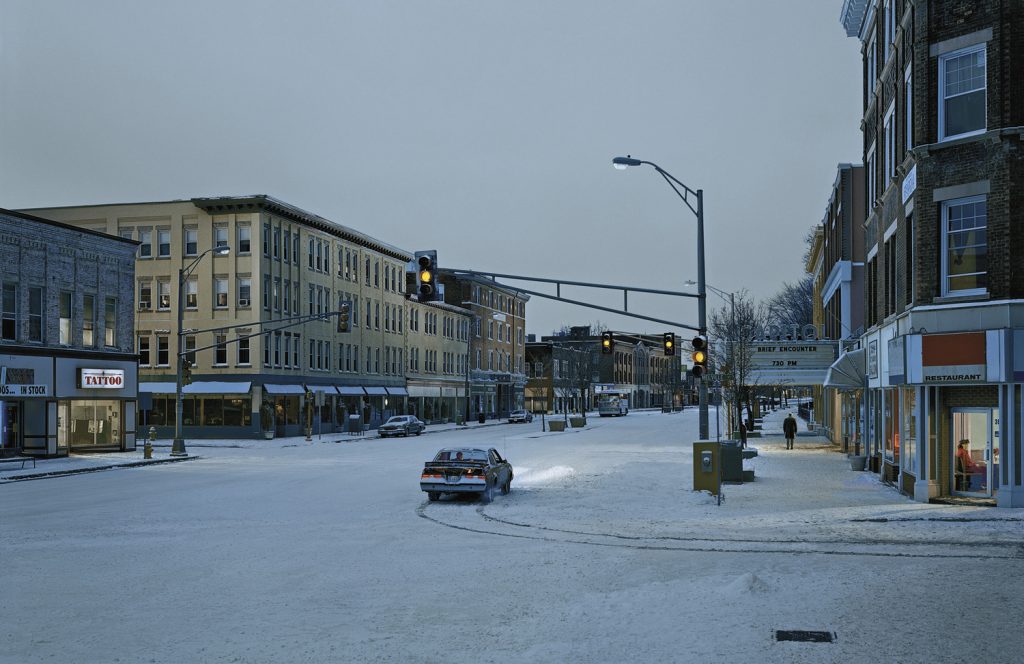
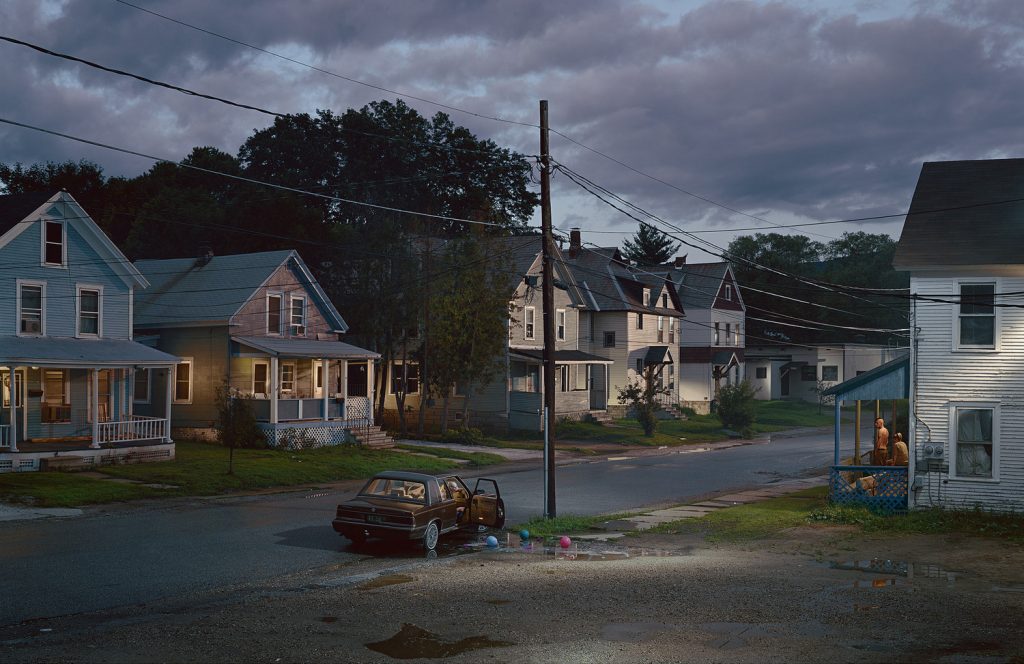
Gregory Crewdson in his tableaus also works in ficticious narratives, in these cases the scenes area real locations but Crewdson has staged an event within We see a seemingly abandoned car, its doors open, balloons floating in a puddle, then we notice a figure in the passenger seat, more people on the porch of the house adjacent. Whats happening here? In the second scene a solitary car appears to be speeding through fresh snow. A sole onlooker, where is the car going, where has it been?
A sense of an unknown event pervades both and that sense of the uncanny is strong. Whilst my image is not so dramatic I hope the viewer is forced to ask questions, although my images do not contain people, using empty space, open doors, gates, the absence of people may encourage the viewer to question what is happening as we do with Crewdsons work.
An image I feel hasnt been successful from the point of view of my FMP is below.
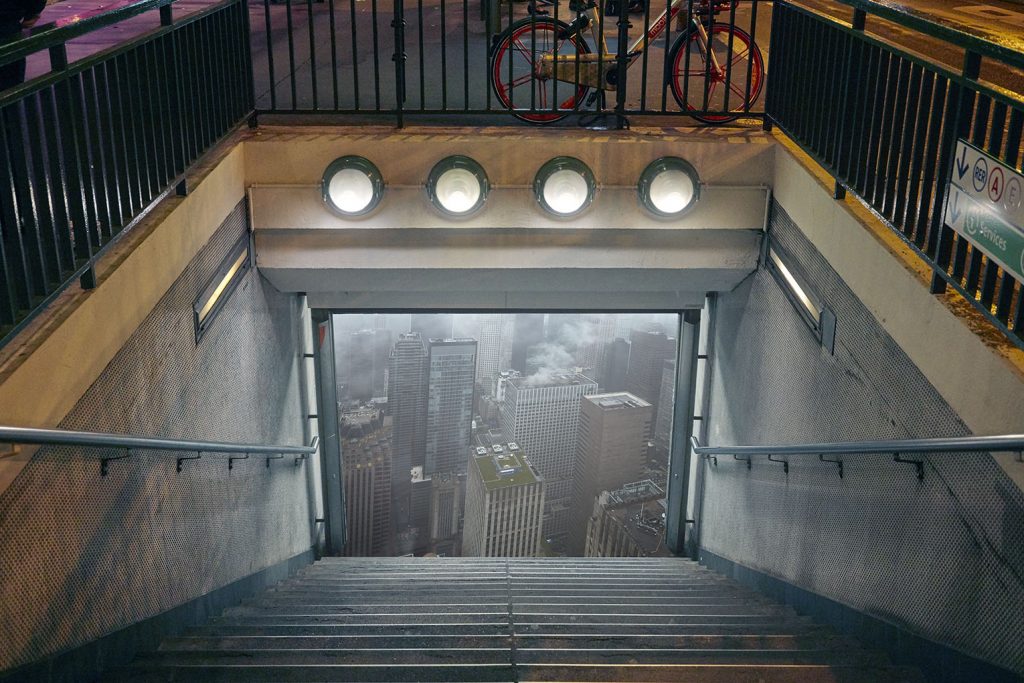
2019 Martin Brent Metro City
Continuing my experiments and taking a surreal turn I contemplated if the Paris Metro system could be a portal to another city entirely and if so how would it appear, where could you be delivered to?
This is very basic and very experimental but I liked the idea of maintaining a downward gaze with the city, in this case New York as seen from the top of the Rockefeller Centre. Its taken on something of a Fritz Langes Metropolis feel, obviously the architecture of the Metro steps and its light fittings contribute but also the notion Lange proposed that future cities would extend on many levels with sky ports and swift mass transit. By changing the magnication of the city it becomes more of a valid proposition that it is there to step onto rather than falling from a great height as the first image makes me feel is likely.
HoweverI dont think this is right for The Inbetween Places however, it doesnt feel real. Im not sure it would ever pass as anything other than a fantasy or dream situation. Certainly worth exploring and maybe the germ of another project at a later date?
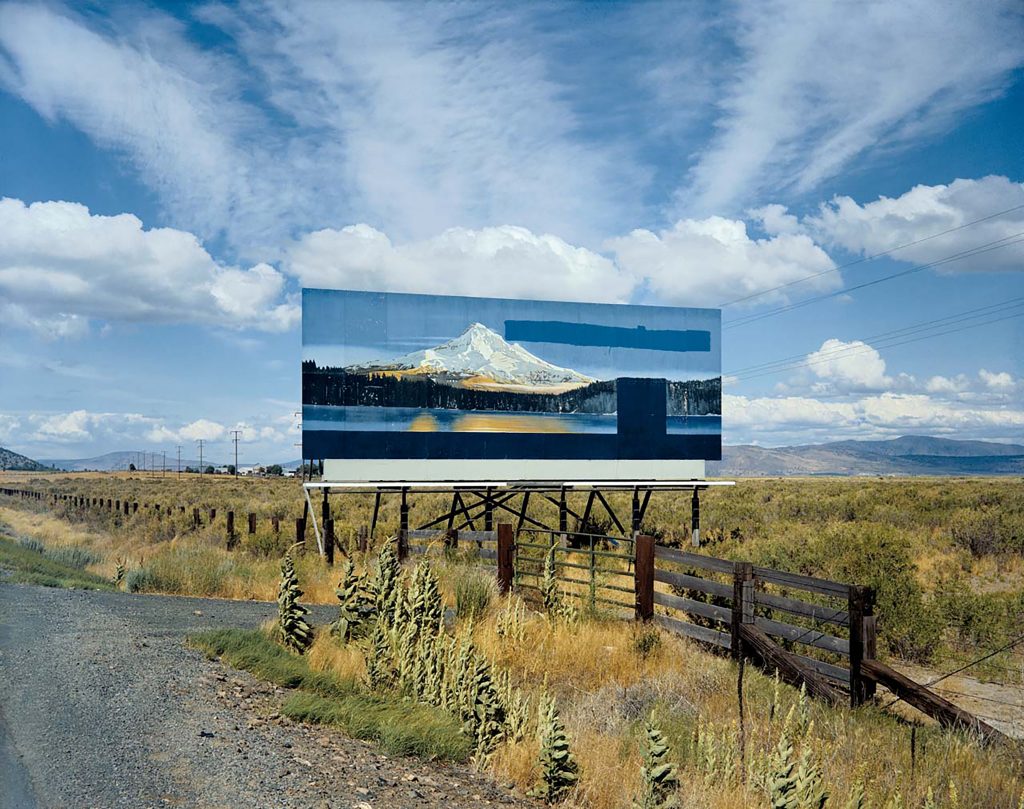
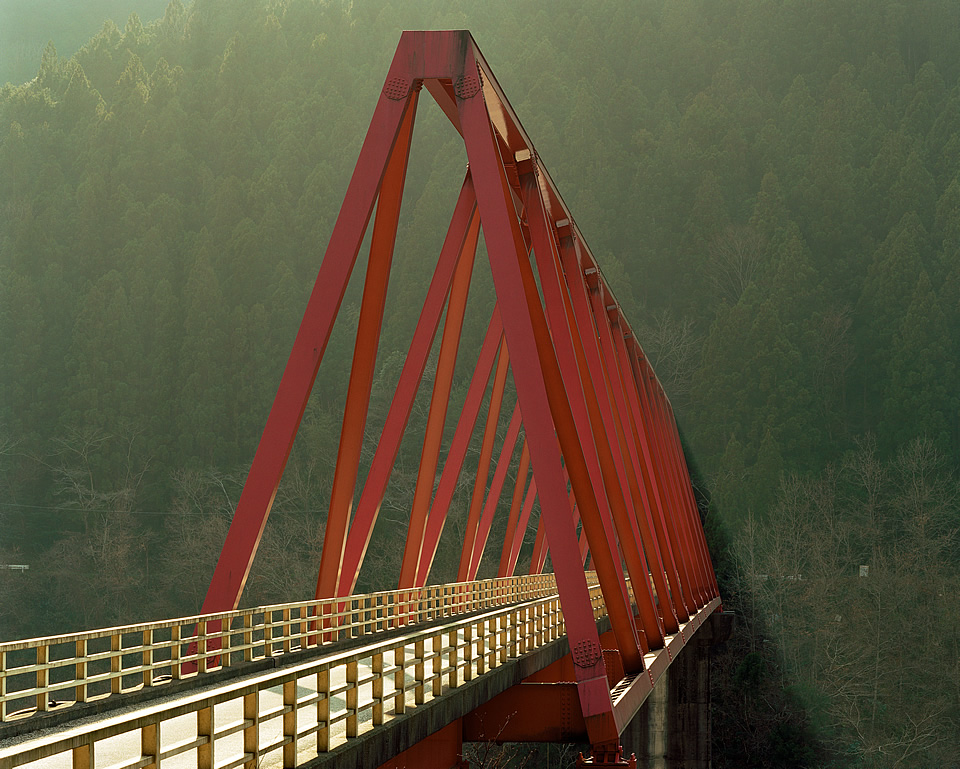
Although my works are constructs its important that they retain the sense of being found. Stephen Shaw and Toshio Shibata both photograph found scenes, both have a carefully considered approach but produce very different styles of images.
Indeed Shibata says “If we take landscape photography for example, they say there is nowhere in the world where people have not visited. Assuming that is true, but knowing every individual has a different approach to taking photographs, something different will emerge in your photos even if you go to places people have been to before, as long as your ideas about that place are different. So you can always find new ways to take photographs, even of the most commonplace things, without necessarily going to places where humans have never set foot. If you regard photography, the medium, as linked to ideas about creative expression, then I think there is no end to the possibilities”
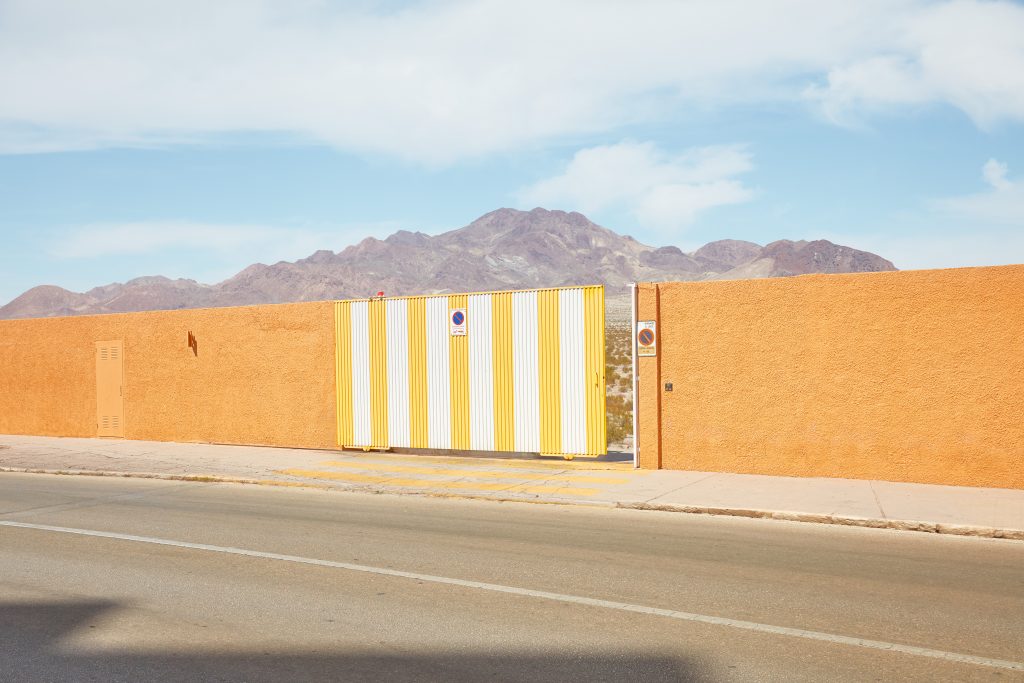
2018 Orange Gate Martin Brent
I feel my images do have the feel of being found scenes, being real places, the aesthetic is not far away from that of Shore but as my images have to be capable of being composited the discipline of Shibata provides a reminder to be mindful when I am shooting the elements.
Developing my practice further in terms of the FMP I think will be more concerned with the means of display and dissemination of the images rather than the content and method of construction which I feel is in a good place, I have a a strong idea of what kinds of image I want to see in the project and the points I wish to make. Technically it is resolved although the continued progression does depend on me continuing to travel. With some unexpected health issues this year international travel is by no means certain and so I may need to consider other mean to obtain yje images I will need to complete the project to my satisfaction.
by brentpix
|
Comments Off on PHO702 Week 9- Enter The Academy
To enter a gallery is a ritualistic experience.
Be it a grand neo classical big city national gallery, the ‘cool’ contemporary art version of the former or one of the many chic small galleries that occur in just about every city in the world.
Voices lower, steps are taken lightly, lingering, the gaze held reverentially, some people ritualistically walk up close (where permitted) to examine detail the artist never intended to be examined in such a way. Quiet tones, the language of the ‘initiated’. Where gallery visits have become deriguer on the tourist trail the sometimes appreciative expressions, glazed expressions of teenagers taken there by parents and the look that says “I don’t get it’.
The language of the guide, the booklet and the curator. Its different. It talks about things like context, intent and indexical qualities. The voices speak with authority, the authority of the institution, the club. The fact the works need to be explained elevates them above the base aesthetic.
The cliche of the ‘art expert’ used in cinema and comedy didnt occur all by itself, humans like tribes, the art world is a tribe and adopts the language, customs and even the dress of the wider tribe.
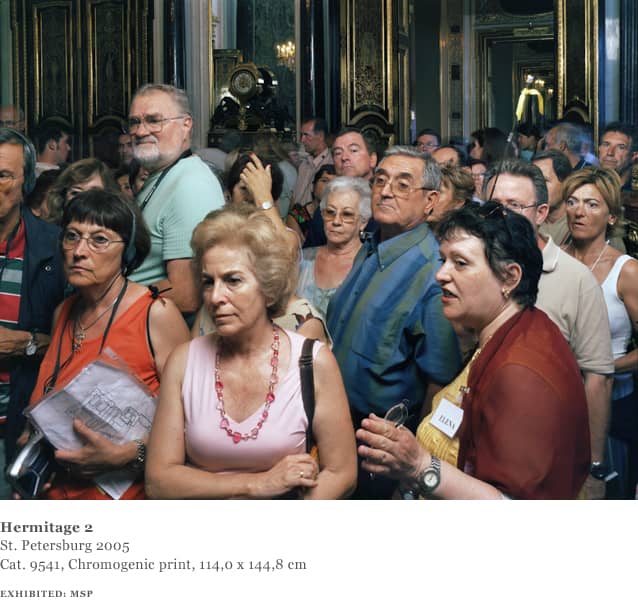
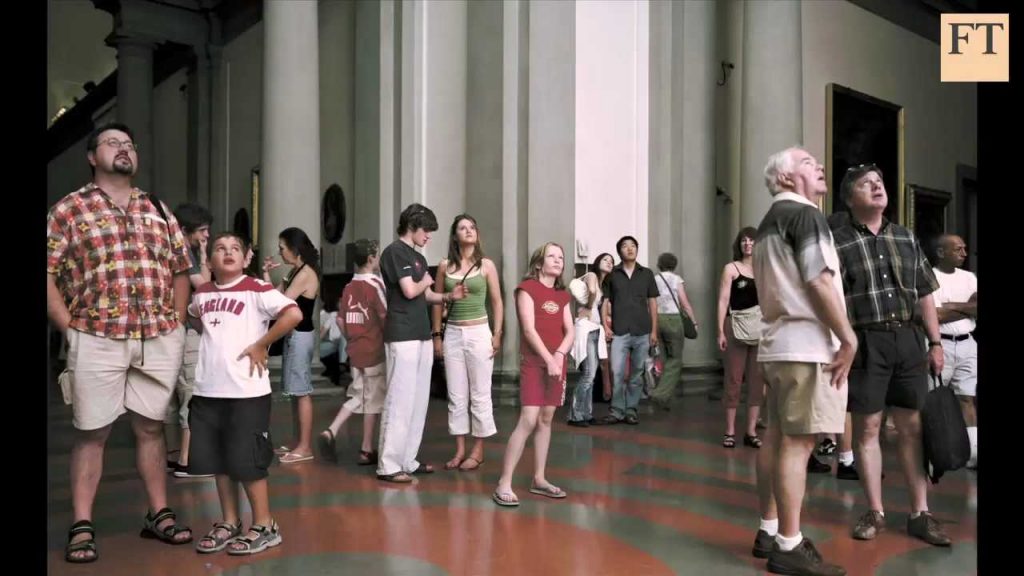
Hermitage 2. St Petersburg 2005 Thomas Struth
Thomas Struth explores this ritual in his studies of gallery visitors, Struth born 1954 in Germany now lives and works in Berlin and New York after a spell of living in London. He says “My interest, or hope, or intent is to address something which has a larger scale, a larger value, than the specific details or locations shown. The photographs must ultimately be driven by interests on a more general level.”
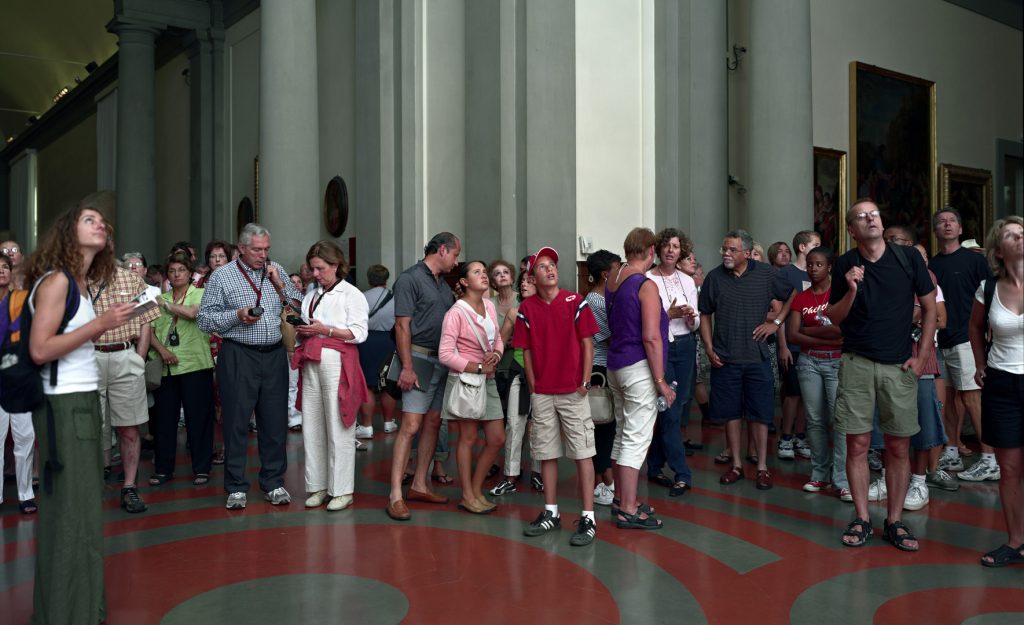
Audience 11 (Galleria Dell’Accademia), Florenz Thomas Struth
Taken over two prolonged periods in the 90s, observing people looking, or not looking at the pictures on the walls of major galleries. “The gallery is a kind of unclear, in between space for many people,”
“It’s not defined like a football stadium or a concert venue. I wanted to capture that interim sense of place.”
Its interesting to see how the visitors gaze is upwards, almost in a religious experience, the next image from Florence 2004 is very evocative of an experience beyond that of simply looking, the visitor themselves take of an almost angelic stance and expression, the same as we see in the paintings themselves or how they may behave in a place of worship perhaps?
It would be interesting to compare religious congregations to these images, Charlotte Cotton points out “We generally take pictures at symbolic points in family life, at times when we acknowledge our relationship bonds and social achievements. They are moments we hold onto, emotionally and visually” [p137]
Could this be connected, has taking a photograph at special times, important events etc become ritualised and by extension an almost religious experience which continues into the places where we go to view art?
As a professional photographer used to looking at images, used to appreciating art photography, even though this was something that occurred as a pure love of the medium more than via education even I felt the language used was exclusive, ie it excluded me. Was I looking at the art ‘properly’? was I ‘getting’ it? Did the fact that the language of the curator generally bored me mean I wasn’t good enough to be there, I wasn’t the intended audience? I wasn’t clever enough?
If I felt this as a fairly confident 30 something image professional how would a kid from an inner city estate or my Uncle Derek the window cleaner from Tipton feel?
Then I listened to the artists themselves, Andreas Gursky first of all, he didnt speak that way, he speaks very matter of factly, I understood him, it turned out I did ‘get’ his work. As my education has become broader and my appreciation of the artists has become wider I find Joel Meyerowitz, William Eggleston to an extent Stephen Shore, Friedlander and all Ed Ruscha speak ‘my’ language. Yet Shore also writes in scholarly terms it still made sense to me.
Ruscha on his own art “I never expected to sell my art. It wasn’t like today where you come out of art school and they promise you a future. Now it’s almost regulated in a way. When we came out of school, we just wanted to make art that’d blow your hair back and do it for sport. There was no commercial possibility that we saw” and goes on to say “Good art should elicit a response of ‘Huh? Wow!’ as opposed to ‘Wow! Huh?” That I understood perfectly and it provides doorway into what appears to be a rarified world.
So I find it something of an enigma but I do get it, the academy needs to elevate and venerate or why else would someone be prepared to pay potentially millions of Pounds for something ‘anyone’ could have done? Even if that patently isn’t the case. Gurskys Rhine II was never going to sell for £3 million if it was described as a ‘nice picture of a river in Germany’ Its not just snobbery, it has purpose, even if some of that purpose is clearly to exclude.
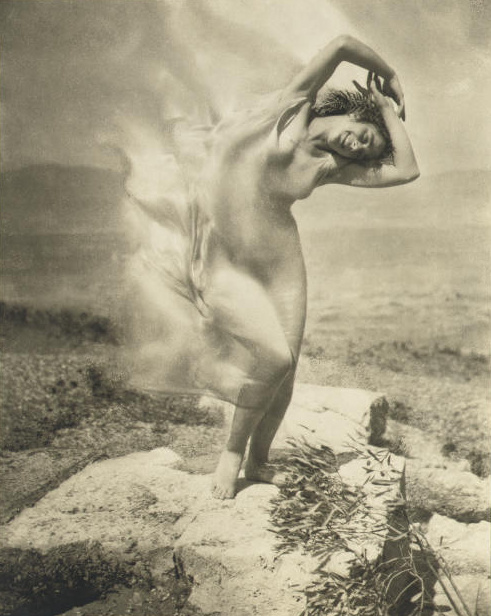
EdwardSteichen-Wind-Fire-1921
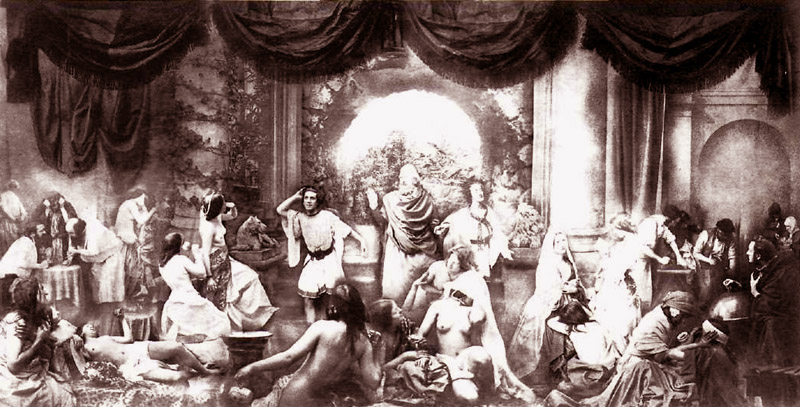
I find art photography very interesting from this point of view. Since photography was certainly not regarded as an art form for many, many years, infact it was very specifically described by its inventors and early adopters as being wholly mechanical and chemical, only capable of rendering what was there, the indexical link between subject and photography impossible to break. Alfred Stieglitz (1864-1946) is credited with getting photography accepted as an art form a lot of photography purely as art existed. Rejlander and his biblical, morality scene. Steichen and art nudes. However the art world spent as many years as it could ignoring photography, the USA becoming attuned and faster to create an art photography scene than anywhere else, the UK still debating if ‘photography is art’ as late as the 1990s, if not now even in some quarters. Thus in my opinion a huge back pedalling exercise had to be engaged.
Oscar Gustave Rejlander – The Two Ways of Life – 1857.
“I have discovered photography. Now I can kill myself. I have nothing else to learn.” – Pablo Picasso
A language invented, references generated, reasons, methodologies, post rationalisation because photography did not have the benefit of hundreds of years of genuine art theory and art snobbery it had to be invented and installed and it has. The term for an inkjet print had to be modified to ‘Giclee’ which literally means spurt.
In the video below I love how different the language of the protagonists is. The interviewer speaks to her ‘tribe’ in her language, its aimed at the youth, the general public and this is a cool, street exhibition, we’re in the door and we’re handed over to the curator Emily. She’s obviously very lovely yet I find her language isn’t flowing entirely naturally, she seems to be picking her words very carefully, she’s not drumming down per se but she’s deliberately using plain language that the intended audience will understand, that’s not a criticism.
The show is featuring female artists only, while Kathryn makes the point that its a shame men and woman aren’t just exhibited side by side on an equal footing, I see Emily makes the point that Whitechapel Gallery is inclusive to all sexes.
So the style of the piece has been carefully thought about, the language isn’t overly ‘arty’. ‘Memory, identity and experience’ are there but are almost required badges in the description of any group show and although she uses the technical term ‘terrain’ she quickly explained what that is in this context, ie the landscape and situations the subjects of the works are shown in.
Sapphire, our presenter, rounds off the piece saying she’s had a very cultured morning, thus once again elevating the gallery experience but goes on to say justifiably the gallery are at the forefront of pushing female artists and the exhibition shows a diverse way of depicting a woman’s body in the arts which is clearly a reaction to the way women’s bodies have been generally appropriated by predominantly male artists over the centuries.
So on balance I felt this piece was making a real effort to be inclusive and the gallery to their credit were also playing their part, I viewed this very positively.
References
Cotton C The Photography as Contemporary Art Thames & Hudson
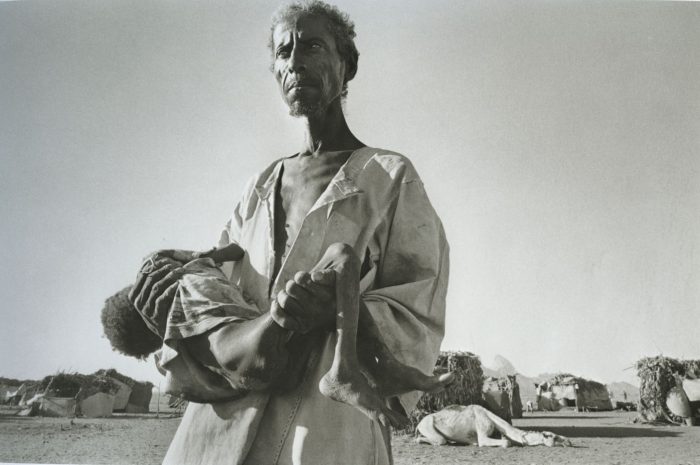
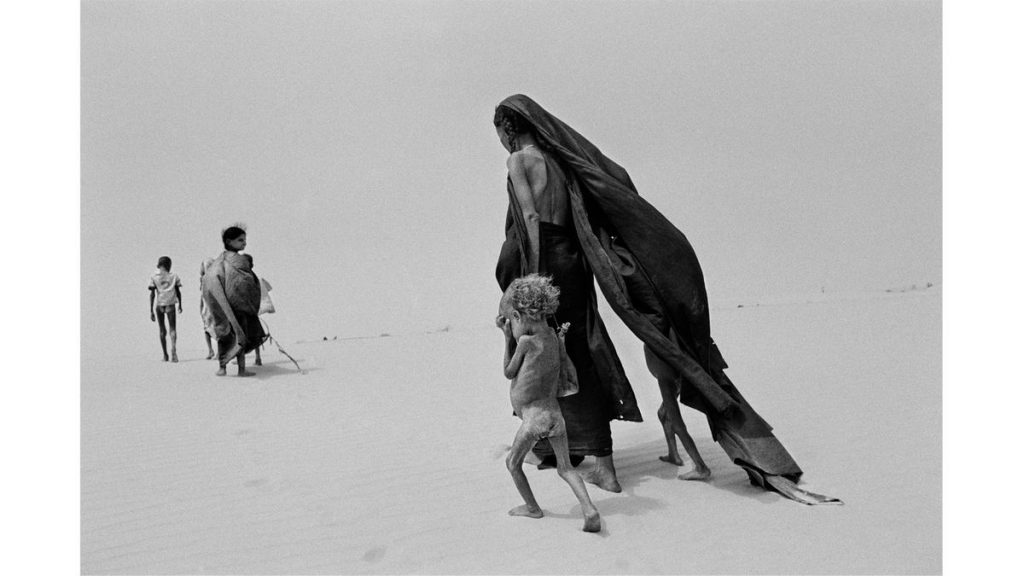
I found the themes explored this week very interesting, reading Sischys New Yorker article reviewing Salgardos latest show at that time “An uncertain Grace” for the first time I found myself in complete agreement. I was always puzzled how a photojournalist had become so lauded in the rarified world of art but that wasn’t my issue. I always appreciated the compositions, technical skills, sheer quality of the works what I didnt like and was never comfortable with was the beautification of human suffering. Just a little empathy invested to imagine walking hundreds of miles with my dying children only to present a tableau of suffering for a rich westerner to exploit before he in turn returns to his first class travel and five star hotel life to become even richer with beautiful images of my suffering? For my benefit? My children? My country?
A phone image of the same scene published immediately, news gathering? yes.
A work of ‘art’? Just no.
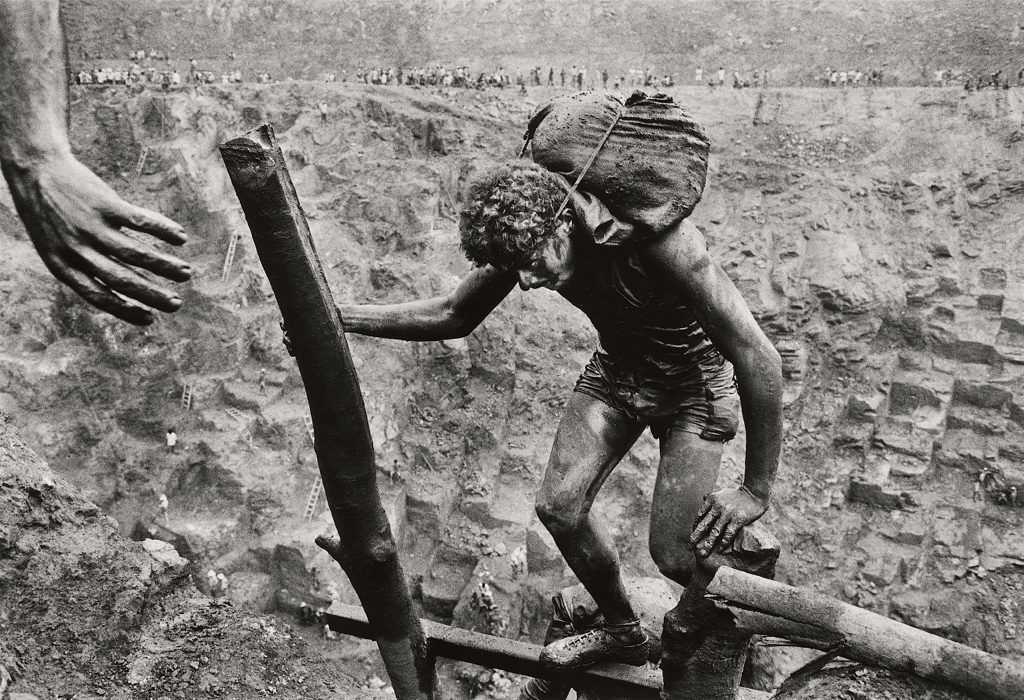
Whilst he and some of his fans may claim otherwise, to my mind the subjects in Salgardos work have no equity in the images, be it part of a human mass in a heaving goldmine or a child near death in Africa the subjects benefit not one jot and I find the quest to beautify their predicament insulting. So no I am not a Salgardo fan and I wish I had seen Sischys article years earlier, this statement from her sums it up.
“And this beautification of tragedy results in pictures that ultimately reinforce our passivity towards the experience they reveal”
Auction 1109, Photography, 01.06.2018, 14:00, Cologne Lot 166
Sebastiao Salgado, Brasil
Above we see one of the workers featured, this man is toiling, everything about him screams misery. Above that a sales notice of ‘his’ print. Its a low priced minor edition bu a life changing sum for this worker. Where is the equity? We dont even know his name.
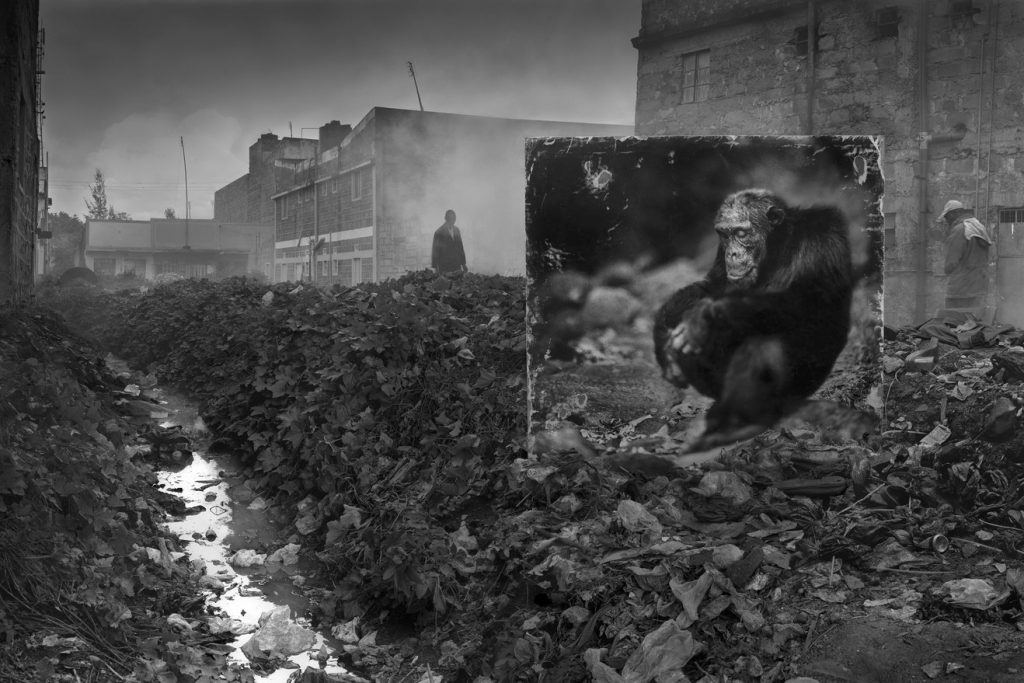
I always quite liked the idea of the aesthetic of Brandts “Inherit The Dust’ images, I think the slog involved and the advertising-esque feel to the project is what appealed, Brandt says he set out to decontextualize his wildlife photographs. Producing life-sized prints of his earlier works, placing them at locations where animals once roamed but are now vanished.
However I was always uncomfortable with the finger of blame these compositions inevitably point at the humans in the images.
Wasteland with Elephant, 2015 Nick Brandt
Every image that contains poor black Africans to my eye are the negative presented as the opposite to the majestic but long lost beast. The cause of its demise. One could surmise had Africa been left alone instead of being conquered, corrupted and enslaved by the worlds corporations there would be a lot more natural beauty left and a lot less of the poverty stricken locals Brandt is apparently happy to exploit in these images. I see no attempt from him to inform that the destruction he shows is largely at the the hand of corporate Europe, China and America. Where are the men in suits, the shareholders and the money men genuinely behind the destruction? Maybe the buyers of his art don’t like to be featured in it?
Alleyway With Chimpanzee-2015 Nick Brandt
However Peter Canby writing in the New Yorker states “The initial plan was to stage Brandt’s subjects interacting with the wildlife panels, but Brandt found the results both too formal and too stiff. Instead, he left the oversized panels in place long enough for the inhabitants to cease paying attention. He was then able to record the unexpected results” and “The subjects of “Inherit the Dust” are the listless, resigned, impoverished people who inhabit these places—people who are casualties of forces bigger than themselves—and Brandt’s point is that these people, and not just wildlife, are the victims of the destruction of nature” Which is another way of looking at it. Im not convinced personally.
The Chimpanzee image makes the point equally well, its a very powerful image and it doesnt appear to sit the blame with anyone in particular.
Brandt observes that the underlying preoccupation of Inherit The Dust is his concern with the consequences of “man’s astonishingly rapid … destruction of the natural world.” Laudable indeed however I cant help feeling like many Europeans throughout history he takes what he wants from Africa, sometimes the people to be used to erect the image panels and appear simultaneously as the villains of the piece. Whilst I love the aesthetic I see a blame game being played out in the compositions that is inequitable to those featured.
NYC 2018 martin brent
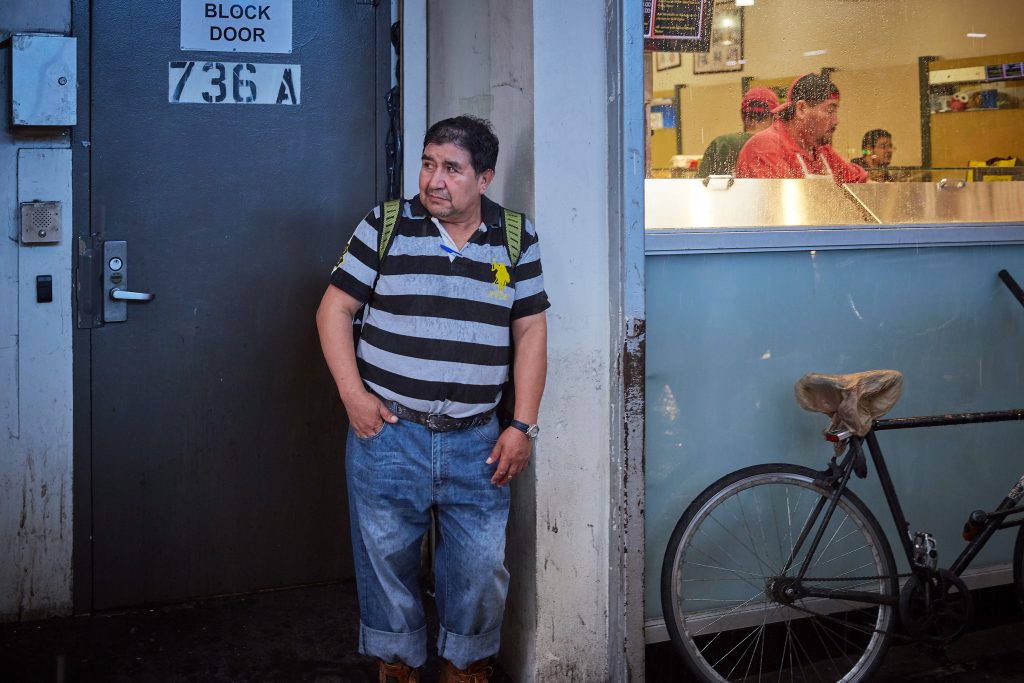
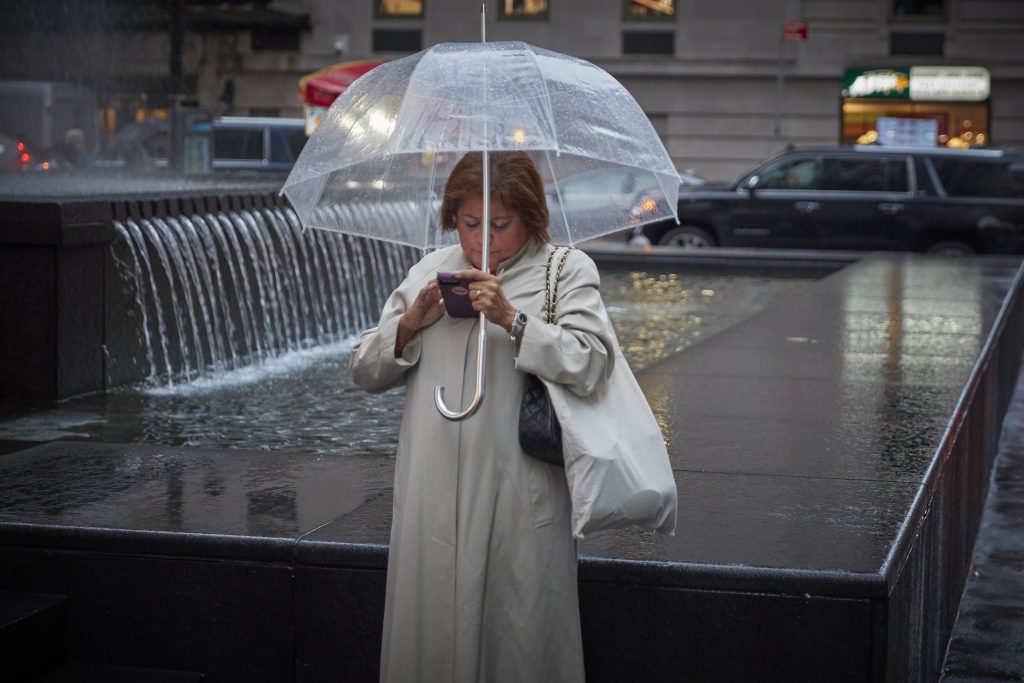
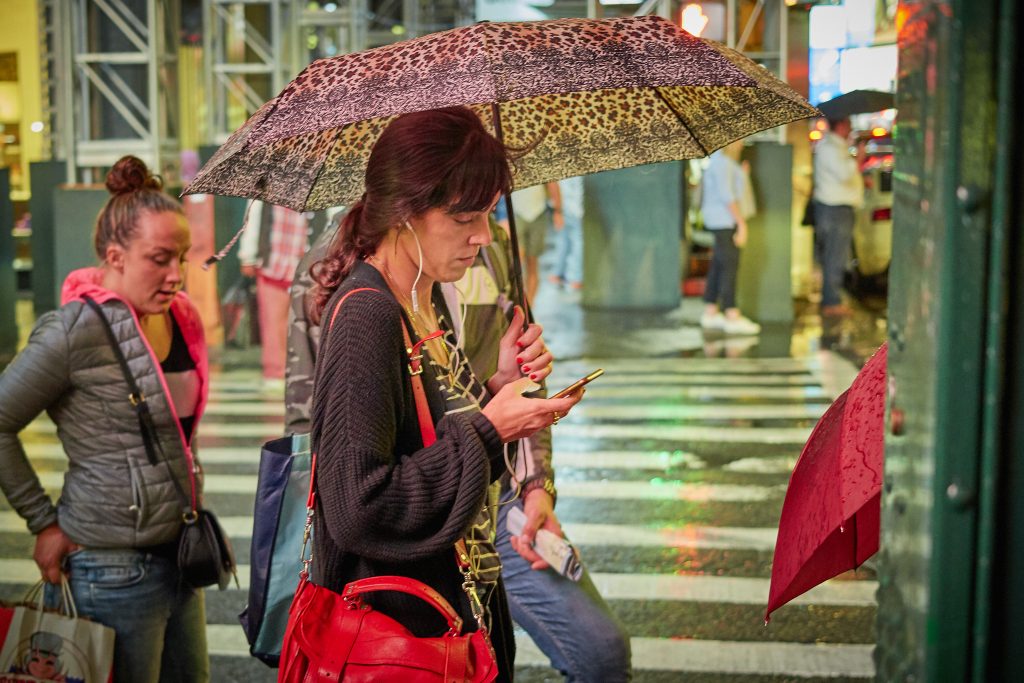
In my own practice I am concerned with taking something away from my subjects, Ive alluded to this internal struggle a number of times in this CRJ, whilst fascinated by and drawn to people and their environment, particularly their effect on those environments inevitably I am concerned that I am using them, often I am making a comment about the negative impact of those actions but by including bystanders who aren’t necessarily directly responsible, am I incriminating them in the same way as Brandt may be? My gaze is often a step or two back, that of an outsider, not so far as to be a voyeur but nonetheless distant.
2018 Martin Brent
NYC 2018 martin brent
Am I being judgemental or respectful? Both. I think the artist should not only always need to confront their motivations for wanting to show people in their images but also be ready to be accountable to those shown. One also runs the risk of being a hypocrite of course, if not intentionally then certainly in the eyes of other viewers of their works. Ive shown two images here of people being engrossed in their mobile phones oblivious to my presence.
References
Sischy, Ingrid. 1991. Good Intentions (Sebastião Salgado) https://paulturounetblog.files.wordpress.com/2008/03/good-intentions-by-ingrid-sischy.pdf
by brentpix
|
Comments Off on PHO 702 Week 6 A Sea Of Images: Independent Reflection
‘National Geographic’ Reckons With Its Past: ‘For Decades, Our Coverage Was Racist’
Before I talk about the above quotation it would be useful to provide the question I will attempt to answer, if not all as its a huge question possibly requiring another post, at least in part
We were asked to look at how our practice may (or may not) be seen as adhering to a specific ideology. The potential impact of this given the subsequent meaning and reception your practice might attract. From whom? and finally any power negotiations within your own practice.
To answer this I think its necessary to talk a little about mass media and how it came to be a ‘thing’. My research has shown the seeds for how we consume photography on a mass level were sewn much longer ago than may be obvious starting with the ‘selfie’ culture of the 1850’s.
“Selfie culture… 1850’s?”
One of the first things I became aware of on this course, literally in the first couple of weeks, was that daguerreotypes were mass produced and very common place, as one offs I had always assumed they were few and far between, expensive and beyond the reach of the very wealthy. How wrong I was.
Invented by Louis Jacques Mande Daguerre it was the first truly commercial photographic process. Briefly the process comprised of a polished silver surface on a copper plate being sensitised. After exposing directly to the subject in a camera it was developed (by mercury vapour) The image was a one off of course, since no negative or means to reproduce it again existed, each precious in its own right
Richard Beard opened England’s first public Daguerreotype studio in March 1841 in Regent Street, London having bought the right as sole patentee of the process in England. Access to the studios of photographers working with the daguerreotype process around 1850 would have been limited to the middle and upper classes so although popular we look across the Atlantic.
‘Jabez Hogg and Mr. Johnson’, 1843, Richard Beard, Science Museum Group collection A daguerreotype from 1843 which is thought to be the first photograph showing a photographer at work. The image depicts Jabez Hogg photographing W.S. Johnson in the studio of Richard Beard.
In the US things were a little more democratic and manny licence holders existed some working with travelling studios touring the small towns which proved incredibly popular. by 1853, an estimated three million daguerreotypes per year were being produced. OK thats no where near the amount of images created by the public now but this is the very birth of photography, the very first commercialisation and already the public were hooked.
A little bit of a history lesson but Im getting to the point, for the first time, people could obtain an exact likeness of themselves for a modest cost. This made portrait photographs extremely popular with those of modest means. As today celebrities and everyday people sought their portraits, there was a trend for workers to have a daguerreotype taken of them, especially occupational portraits.
Fast forward to today, whats changed? Everything and nothing it seems, the second it was possible to obtain a likeness it was immensely popular with people commissioning their portrait to share socially. The accessibility and cost were the drivers and a societal expectation to share the images ensured a new image would always be needed. In todays world cost and accessibility again were the driving factors behind the explosion in selfie culture where using a smart phone its possible to easily share images on platforms like Instagram and Snapchat. The social imperative to do so immense.
My observation being people dont really change and neither has their idea of how to project their likeness on the world.
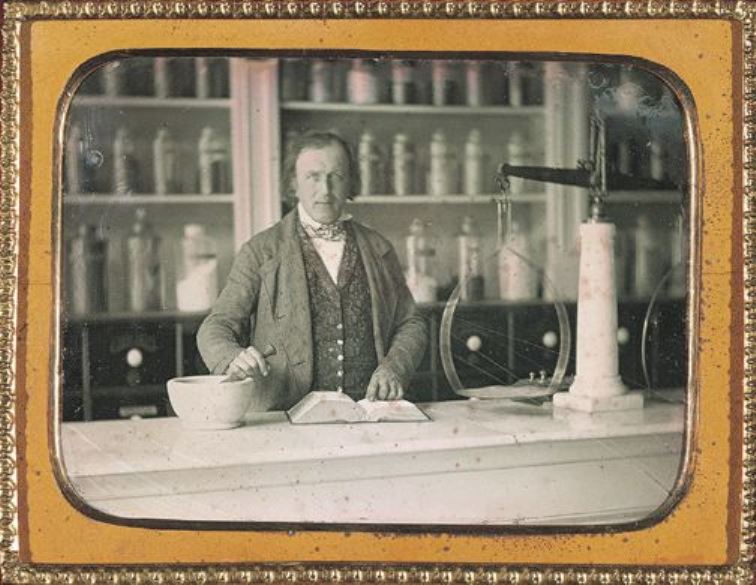
Uknown Chemist, USA circa 1855
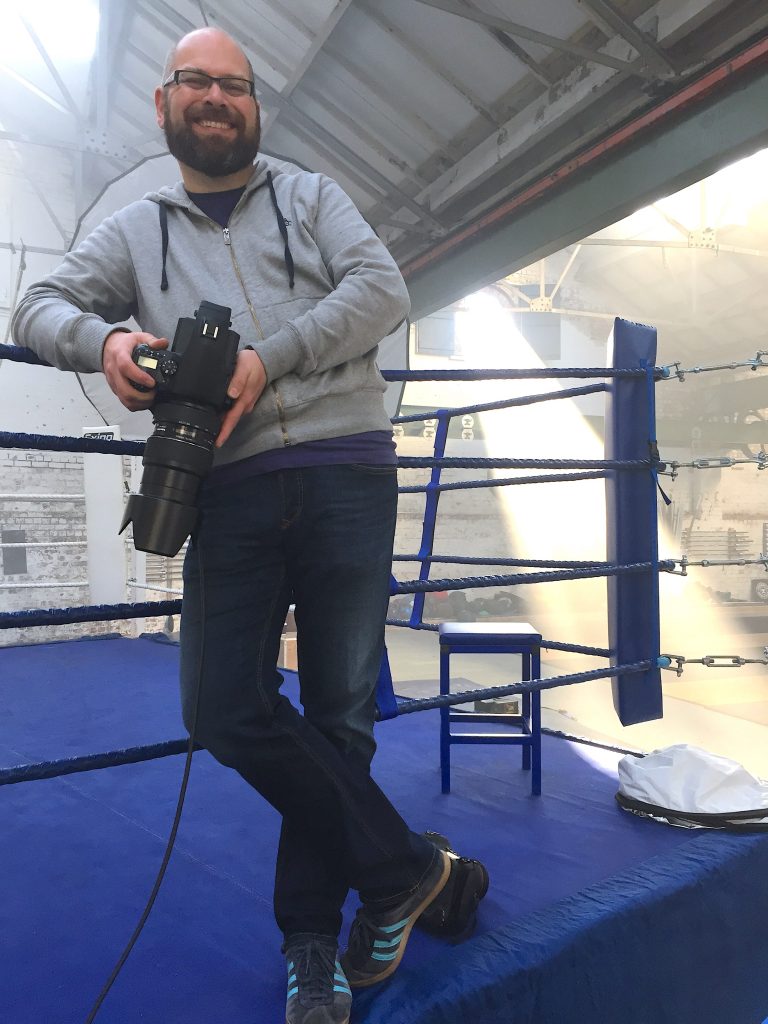
Whats the difference between this image from the 1850’s of a chemist in his place of work to this image of a photographer, ok me, on set of an advertising shoot in 2015 which was shared on Instagram?
Iphone image, Martin Brent on location, Sheffield UK 2015
Apart from the informality that the technology of today allows theres no difference in content nor the desire to describe our place in the world at that given point. I may be self deprecating when I describe my hideous self in these kinds of images but I am proud that I got to do what I studied and worked hard to achieve and the chemist would also be motivated by the same emotions.
This is a very long introduction to discussing how peoples ideas of photography have changed over time. In terms of the portrait of ones self then apart from means of capture and transmission then I would put forward that nothing has really changed, the content and formality aside. What would be considered acceptable content to include in a publicly accessible image back in he early days of commercial photography to now are clearly very different and I believe this is also reflected in the content we generate as practitioners as we are in turn influenced and influencers of societal and cultural changes.
By changes I suggest a better description would be education as our understanding and empathy with the other humans we share our world with increases (or doesn’t, or is subverted)
For instance National Geographic Magazine.
Catherine Lutz says she “devoured every issue. It was this beautiful and exciting set of pictures and stories.” She even credits National Geographic with inspiring her to pursue a career in anthropology.
“It stood for science, It stood for education. It was used prolifically in schools. It also stood, though, for a kind of white view of the world.”
The mandate from Gilbert H. Grosvenor, one of the magazine’s earliest editors was print nothing “controversial” or “unpleasant.” but thats where the problem starts because to judge if something is unpleasant requires the image to be compared to a set of values and the values of the person doing the assessment are the crux.
Lutz who co-wrote the critique ‘Reading National Geographic’ in 1993 goes on to say
“It’s an ideal world,” she says of the magazine’s coverage. “It’s safe, and it’s basically free of problems. Just lots and lots of smiles.”
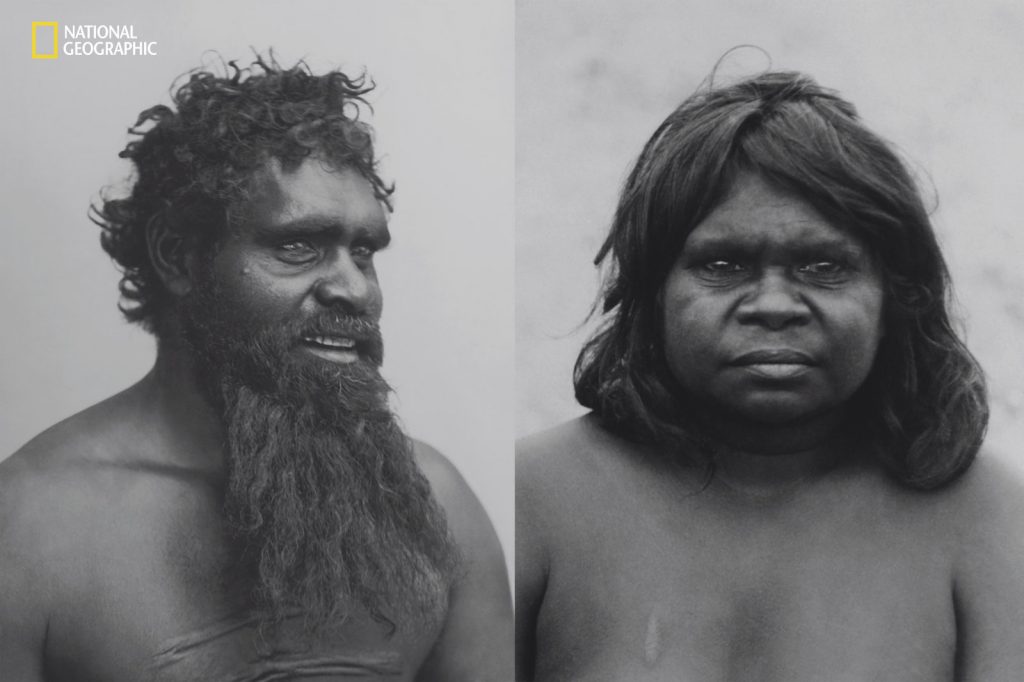
In a full-issue article on Australia that ran in National Geographic in 1916, aboriginal Australians were called “savages” who “rank lowest in intelligence of all human beings.” The magazine examines its history of racist coverage in its April issue. C.P. Scott (L) and H.E. Gregory (R)/National Geographic
Take the above images, as a younger man I would not have given them much thought, the wording I would have without doubt but without that I would have viewed these images passively.
Now I find them exploitative, I understand more about how Aboriginal people were persecuted and I now see the images not just as holding up people who are different but also creating a difference, ie these people are not equal, almost as objects to be evaluated, not people. I dont like it. I look at their expressions and I dont see happy people, they look disempowered.
John Edwin Mason, professor of African history and the history of photography when asked by Editor In Chief Susan Goldberg to examine the Nat Geo Archive reported back
“The photography, like the articles, didn’t simply emphasise difference, but made difference … very exotic, very strange, and put difference into a hierarchy,”
“And that hierarchy was very clear: that the West, and especially the English-speaking world, was at the top of the hierarchy. And black and brown people were somewhere underneath.”
“Teenage boys could always rely, in the ’50s and ’60s, on National Geographic to show them bare-breasted women as long as the women had brown or black skin,” Mason says. “I think the editors understood this was frankly a selling point to its male readers. Some of the bare-breasted young women are shot in a way that almost resembles glamour shots.”
Its an uncomfortable truth because we have all looked through those pages contemplating the exotic and far away places without giving much thought to those depicted.
Mason offers some comfort
“We’re all curious and we all want to see. I’m not criticising the idea of being curious about the world. It’s just the other messages that are sent–that it’s not just difference, but inferiority and superiority.”
Goldberg states “Unlike magazines such as Life, National Geographic did little to push its readers beyond the stereotypes ingrained in white American culture,” its also worth noting that she is the first woman and first Jewish person to hold the Editor In Chief position.
“two groups that also once faced discrimination here.”
Mason notes that even though the magazine’s images have been blatantly racist or skewed reality a number of African photographers have told him that it was publications like National Geographic and Life that inspired them to pursue photography in the first place..
“They knew that there were problems with the way that they and their people were being represented,” he says. “And yet the photography was often spectacularly good, it was really inviting, and it carried this power. And as young people, these men and women said, I want to do that. I want to make pictures like that.”
So how does this feed into my practice, has this informed my image making. Everytime I press the shutter release I contemplate the the potential impact and what the subsequent meaning and reception my images might receive not just from my audience of this moment, largely photography enthusiasts and largely discerning but also a wider audience in the future. That wasnt always the case though.
As a photographer who travels this is a very real concern, I shoot a lot of street imagery and also portraits of people I find interesting. Does the fact I find them interesting because essentially theyre different to me and my culture automatically put me on the backfoot?
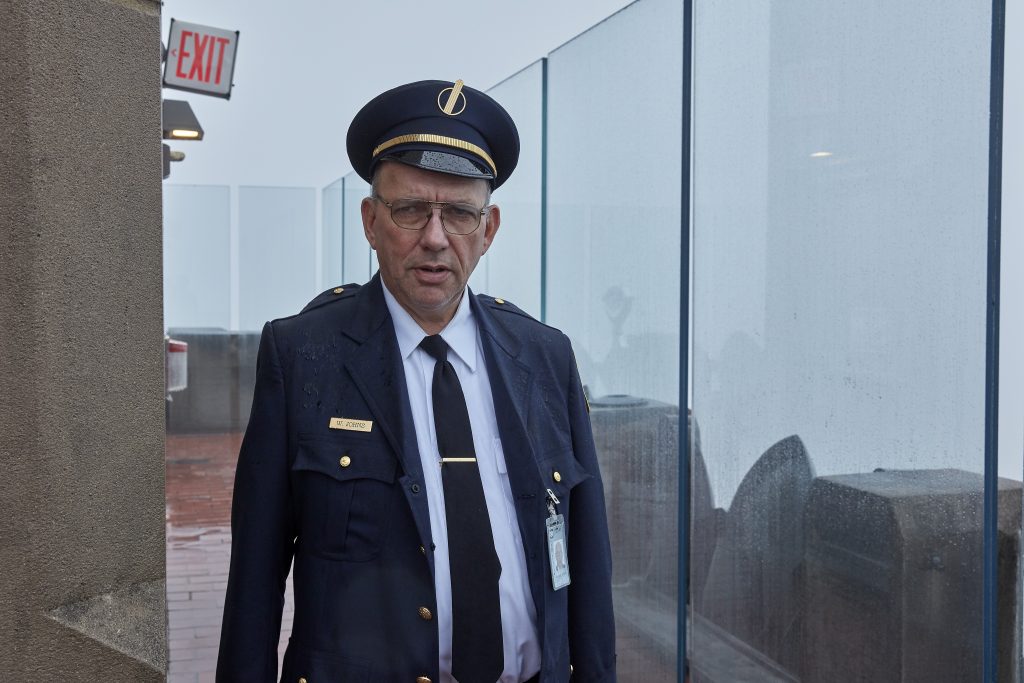
New York 2018
The portrait above was taken on the roof of the Rockefeller Centres roof, the weather was dreadful, torrents of rain, I spotted this guy was the only security guard without a rain cape, I asked if I could take his image “looking like this?” he asked. I commented on his lack of weather protection and he advised he’d only been in the job for two weeks. Its not the worlds greatest portrait but it was an equitable exchange.
Cancun Cop 2003
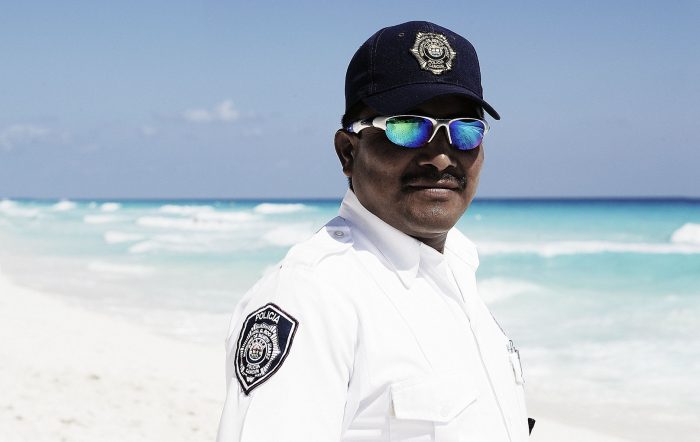
This image taken in Cancun Mexico, again an equitable exchange, I loved his blue Oakley sunglasses echoed and reflected the blue of the ocean, his white shirt the sand of the beach, the beach cop was literally the beach.
Either of the above images I am happy with, they were taken in a fair exchange of understanding, entirely voluntarily, I feel the images are honest representations of reality on that day for that person.
Sahara, camel market 1996
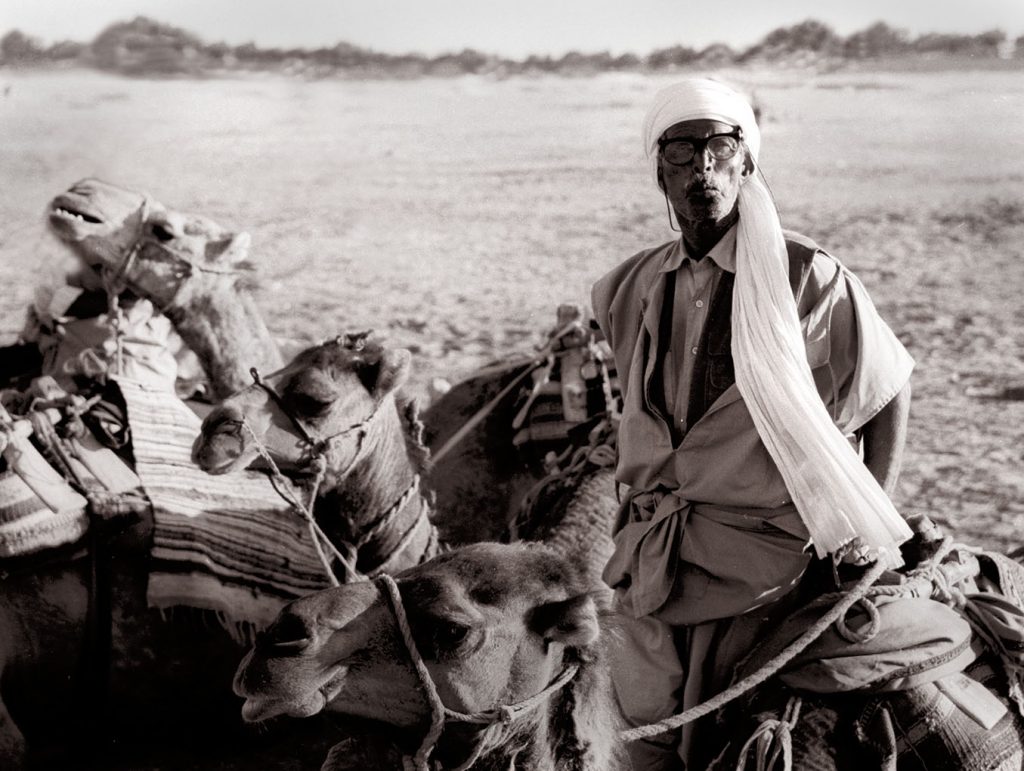
However the above image that I was quite happy with at the time I now feel very bad about, The image is of a camel trader at what was an illegal camel auction, I didnt understand at the time but the government of that country wished to ‘modernise’ the country and had banned many traditional practices including this market. I had been despatched there by a tour operator and I was just looking for ‘cool images’ I wandered around the auction, most people were really good natured, I didnt feel like I was intruding, it was all quite scruffy though, too many buildings and nt enough desert then I saw this guy and raised my camera, he noticed and wasnt happy. I could see that but took the shot anyway. This image is exploitive in the same way the Nat Geo images are, I have cast this guy in a role, theres no equity here and he’s clearly not even happy about me taking his image. Apart from my bad manners I now I realise he could have been very worried that the photographs could be used against him. I just wanted ‘Arab’ and camels to tick that stereotypical box and please my client.
“Garry Winogrand was famous for never asking people permission before taking their photographs;” writes Caille Millner in a review of the photographer’s current retrospective at SFMoMA, “a whole generation of male photographers idolized him for shooting however he wanted, whenever he wanted.”
Will the way we view his images change? Millner writing in The San Francisco Chronicle certainly seems to think soas he describes what he calls Winogrands uneasy eye.
However I don’t think it’s necessary to ask permission every time you photograph someone on the street, candid street photography is as old as photography itself and provides an important historical record as well as insight into everyday lives. Where it becomes grey or plain disrespectful is when the subject has had their equity removed, their dignity or exposed in such a way its obvious they would not be comfortable and I think it is this that Milner refers to.
Tunisia 1996
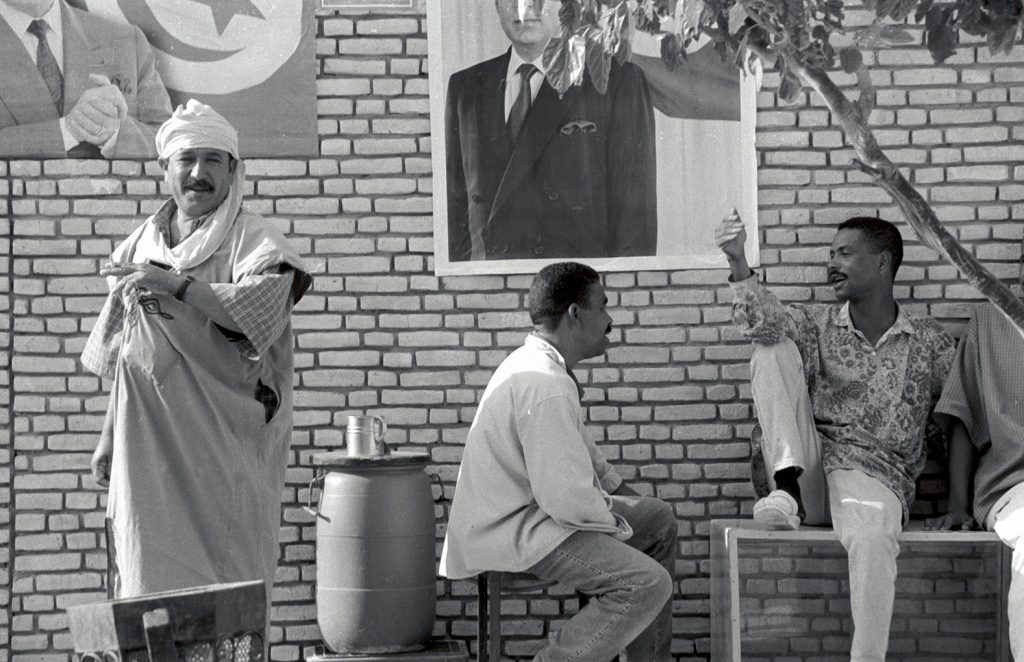
This was the reality of the region I was visiting, a diverse population, lots of brick built buildings, this shot I had permission for, clearly this was never going to sell trips to the Sahara but I like it. Note the posters of the General in charge of the country at that time, ever watchful, I cut his gaze out of frame purposefully.
I dont think my practice obviously adheres or could be seen as adhering to any particular ideology, I do try my best to avoid that but I guess the only way is to ask the audience what they see. However its inescapable that we all have many things we believe in, have issues with, approve or dont approve of. Our personal ideology.
Joerg Colberg reminds us “We all cling to our belief systems, to the many positions we hold dear, the many things we believe in — our personal ideology. It is very hard to look at a photograph without bringing it to the table, and we consider what is in front of our eyes using this very specific angle. This is, after all, what it means to be human. We have opinions”
“If there’s ideology in photographs, it’s because we put it there, less so because someone else did”
Most importantly I think how we read a photograph tells us about ourselves, looking at how you have viewed images and taken images at different stages of your life tells us that this is a fluid situation. We gain understanding by being better educated, socially literate, more aware of the greater world. Visually we hope more literate.
We build on our life experience and our empathy should grow as a result. Society should progress as a mass and as it does we develop and inform our gaze. (this can work in both a positive and negative way).








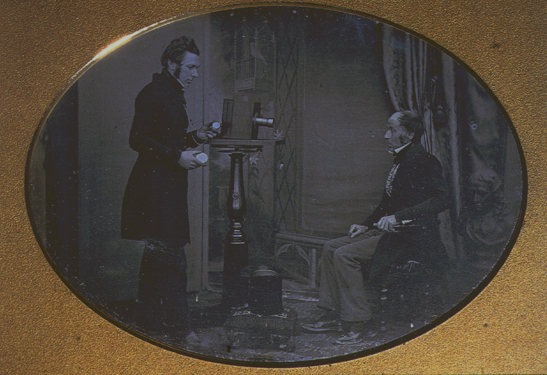 ‘Jabez Hogg and Mr. Johnson’, 1843, Richard Beard, Science Museum Group collection A daguerreotype from 1843 which is thought to be the first photograph showing a photographer at work. The image depicts Jabez Hogg photographing W.S. Johnson in the studio of Richard Beard.