PHO 704 Week 3: Forum – Art & Commerce

Ive always worked professionally in photography,  all I ever wanted to do growing up in the recession hit 80’s Midlands was be a photographer, my early influences being ads in glossy magazines, notably at that time cigarette ads, although Ive never smoked,  I was very attracted to the ads, the concepts behind the image, the often intricate and perfectly executed photographs fascinate me.  I got my first camera for my 10th birthday and as much as a result of lack of careers advice and guidance I found my way onto a Diploma course in photography after I left school.  I knew I wanted to shoot advertising and that was about as much of a career plan as I ever had.   After study I went into assisting, mainly car work and general advertising stuff in London before I eventually started to get my own shoots, my big break I guess was shooting for package Holiday operator Thomson whose commissions sent me around the world a few times and although not always super creative jobs allowed me to build a solid location based personal and advertising folio.

I had little or no interest in photography as art, apart from occasional reference on commercial shoots it just didnt feature but shooting my own images prolifically I always felt there was more to it them a results based ending which is what advertising photography was really all about.  When (pre digital) you spent most of your time looking for now looks, using film stocks, developing and print processes along with camera and lens combinations in pursuit of a new style no one else had and be able to repeat it for paying clients its very hard to take  totally pragmatic approach to image making thereafter.    However as my interest in photography expanded, as in photography in pursuit of an idea rather than just an image,  gifts of photo books, notably  Gursky  Photographs 1984 to the present lit the fuse that ultimately led to this point with me studying the MA.

Whilst I have been an avid collector of photo books and very interested in photography as art for a long time now I still struggled to understand and certainly explain my own practice.  Having been asked to place images in the occasional gallery and having some success with sales I never felt my work was particularly informed, it still felt too close to advertising work, I knewI had a lot to say, just didnt know how to say it I guess.

From a career point of view its gone OK,  I’ve earned my living solely from photography from leaving study to now at 51 and I know how lucky I am to have been able to do what I love but I find  my personal practice  satisfies me more now and also provides reward of a non transactional nature.

So my (rather long) answer to the question is a reverse situation,  I’m looking to move away from commercial and into art very much as Nadav Kander has done very successfully. An advertising photographer I always respected,  he’s transitioned  into art but also fostered a commercial art based presence which has enabled him to secure interesting commissions as a result, an example being the Obamas People project commissioned by the N Y Times
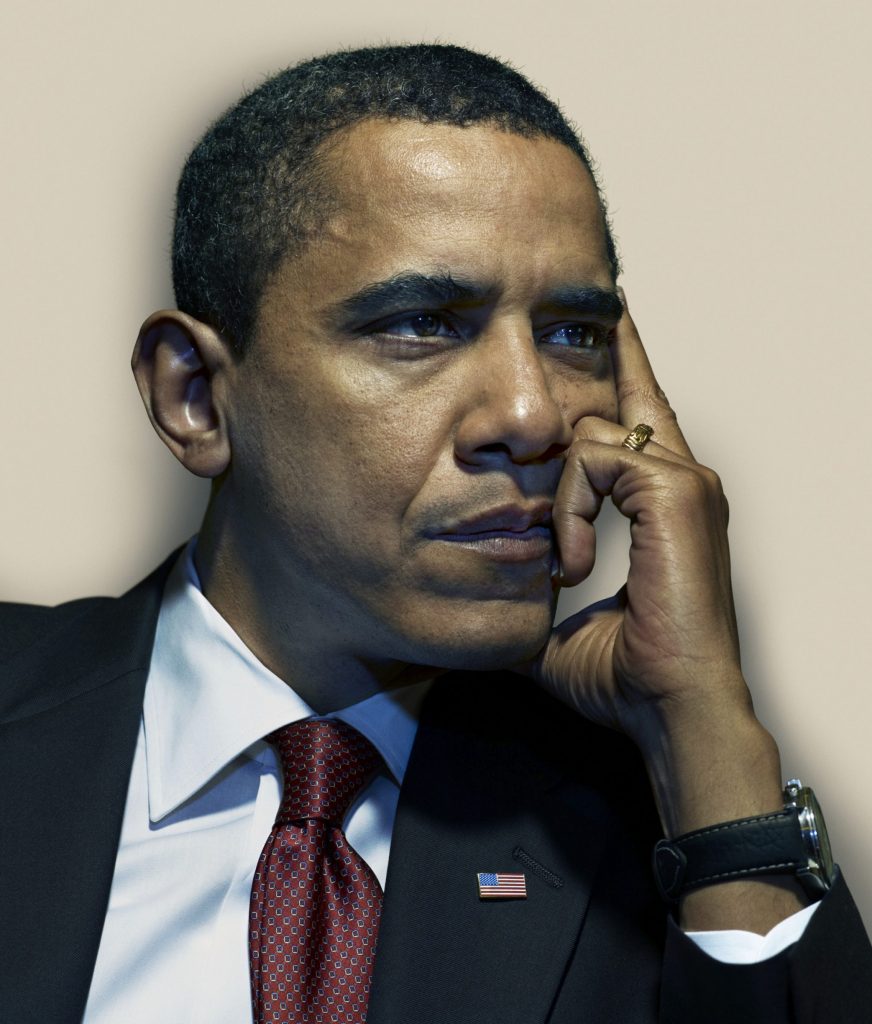
Nadav Kander- Obamas People

https://www.nadavkander.com/portraits/obamas-people/single

Kander now exhibits and speaks widely but also cannily still shots commercially for ‘arts based’ clients like Netflix, National Theatre, Amazon Prime which would be my absolute ideal personal scenario.

Going the other direction, ie an arts based photographer coming into commercial I struggle to think of many to be honest because it depends where you draw the line of when they became an artist.  Gursky is undeniably an artist but started as an advertising photographer in his fathers studio in Dusseldorf, became the artist we know but shot commercially for Fifa and F1 since.
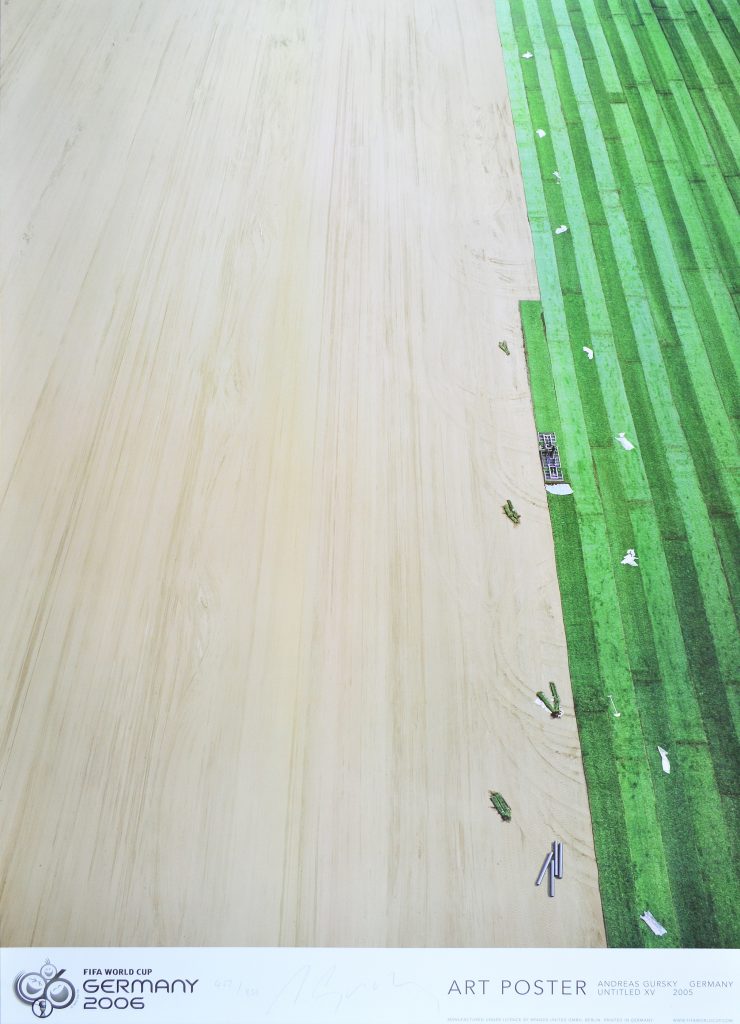
Andreas Gursky, Fifa World Cup Germany 2006

The approach of Kander and Gursky resonates with me because they have been successful in taking their art full circle and back into the commercial domain.  As much as I like to tell myself otherwise, my personal practice cannot help but be informed and influenced by my advertising work, certainly from a technical point of view,  I cannot declare an image a success unless it is technically perfect (ie how I had prescribed it in my head) and sometimes knowing exactly what will happen before you press the shutter can prevent you from having those happy accidents and indeed experimenting which is essential unless you wish to become stale as old bread.   By the same token knowing what is technically bad but provides a beautiful aesthetic, ie lens flare, light leaks etc is great and can be part of your commercial repertoire but by the same token can become prescriptive when it doesnt occur by accident or natural circumstance

So in short I think its very difficult to truly move from one sphere to another,  without the technical expertise and understanding images wont always be successful in the commercial sphere, equally the in depth knowledge of technical, advertising and commercial photography demands can certainly impede the creative and artistic process but practice informed by both can result in truly wonderful things and I would hope to be able to achieve this balance one day day as Kander has.


Refs:


https://www.nadavkander.com/portraits/obamas-people/single

https://www.artedio.com/andreas-gursky-fifa-wm-2006-poster-edition-lithograph


Pho 704- Week 2: Whose Image is it Anyway?

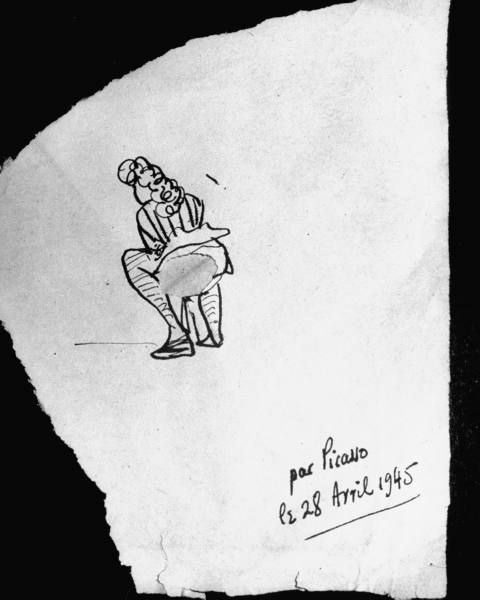
The Cariou Prince case puts me in mind of this anecdote,  it has numerous forms and I’ve reconstructed this from a couple of different versions.

Essentially Pablo Picasso was out dining, or drinking in a cafe when he was approached by a man, or the owner of the cafe, as I said there are various versions.  Anyway the man asks Picasso if he will do a quick sketch on a napkin for him.

Taking a charcoal  from his pocket, Picasso makes a sketch of a goat. Only a few strokes, yet was unmistakably a Picasso. The man reaches for the napkin, but Picasso doesnt  hand it over.   Instead says “You owe me $100,000,” 

The man was outraged. “$100,000?  Why?  That took you no more than a minute to draw!”

Picasso crumpled up the napkin and stuffed it into his jacket pocket. “You are wrong,” he said, dismissing the man. “It took me 40 years.”

The man of course missed the point, the napkin was worthless, the drawing only rudimentary but adding Picassos signature, his brand if you like, elevated the value to whatever the going price of a small Picasso was.

The court, in my view punished Cariou for making a similar mistake,  the monetary value existed because of Princes brand and that only.  Very harsh and in my view a nonsense but interestingly was also the prevailing view of the ‘art world’.  I say this is a nonsense because had you removed Carious photography Princes doodle is meaningless, it has no context, its clear the ‘success’ of the work leans heavily on the photography.  Not withstanding the photographer spent a great deal of time and effort, for little monetary gain to produce the photography, equally it wasnt selling for the price Prince commands.

Im not condoning Princes actions, personally I find this reprehensible however his ‘contribution’ cant be ignored so I believe a fairer judgement would have given Cariou a fair percentage of the proceeds recognising the success of the art really did depend on the photography and not Princes brand alone which was essentially the ruling.    Again, lets test this by showing the doodle in isolation, it becomes meaningless.  So the court ruled on a point of law and recognised only Princes brand but was it morally correct and did it provide justice?

I would say certainly not.

refs:

https://mydrap.com/en/blog/the-most-famous-napkins/ (Links to an external site.)

https://medium.com/better-humans/picassos-napkin-the-myth-of-the-overnight-success-d838e8dcdfd8 (Links to an external site.)

https://quoteinvestigator.com/2018/01/14/time-art/ (Links to an external site.)

PHO 704- Week 1- Research Methods

We would like you to share the different research methods you plan to use this term when creating your Work in Progress Portfolio.

As contemporary photographers today you will all be used to carrying out a certain amount of practical or contextual research before, and during, the creation of a body of work.

My Project is concerned with the land as seen and owned divided by borders. It also looks at national identity and the way architectural and natural features are appropriated as a declaration of that national identity.

The project explores what happens when those features and land masses are taken from context and recombined to make a ‘new’ place. During the course of this project I have found when you look at national identity, nationalism also comes to the fore and that borders are often also seen as barriers that should remain closed or only open to a select few.

This in turn has led me to explore who those excluded might be and inevitably the consequences of that exclusion. This has actually proved to be quite traumatic, I find it difficult to view images of often very upsetting subjects and be able to put them aside, the images stay with me and Ive found it difficult to not at least consider if i could or even should attempt to include some in my project. So in practical terms its meant me pursuing dual projects for a little while now.

In an unexpected turn of events I have also found myself spending a lot of time in hospital too so my planned image gathering activities have been dealt a considerable set back. International travel will not be possible until my surgery is complete and healed enough to be signed off and be able to obtain insurance again.

To answer the question in terms of practical research I am doing the following.

  • Researching news sources for features and essays on migration
  • Researching the history of the architectural and man made objects I intend to use in my tableaus.
  • Explore using appropriated or stock imagery in view of my heath issues.
  • Explore my own back catalogue, I had intended all imagery to be shot as required but this is now unlikely.
  • Explore the ethics of using appropriated images especially when of emotive events.
  • Continue to look at artists who are working in the tableau genre.

Contextual Research wise I am looking at the work of:

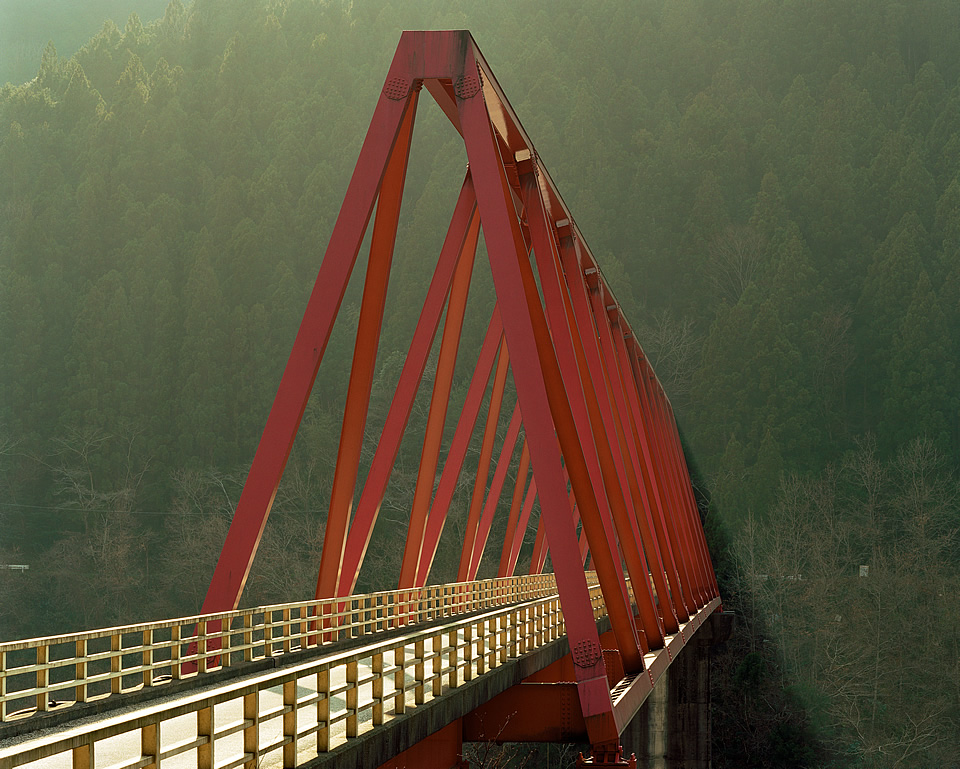
Toshio Shibata, although his images are not tableaus he has an ability to isolate his subject by careful use of light and composition. In my own practice I have also found being very selective with lighting and ensuring my elements carry this theme through helps to give not only an other worldly, slight sense of uncanny but also a feeling of reality to them. In Shibatas work I find myself asking if the subject is really real.

Okawa Village, Kochi Prefecture 2007 © TOSHIO SHIBATA

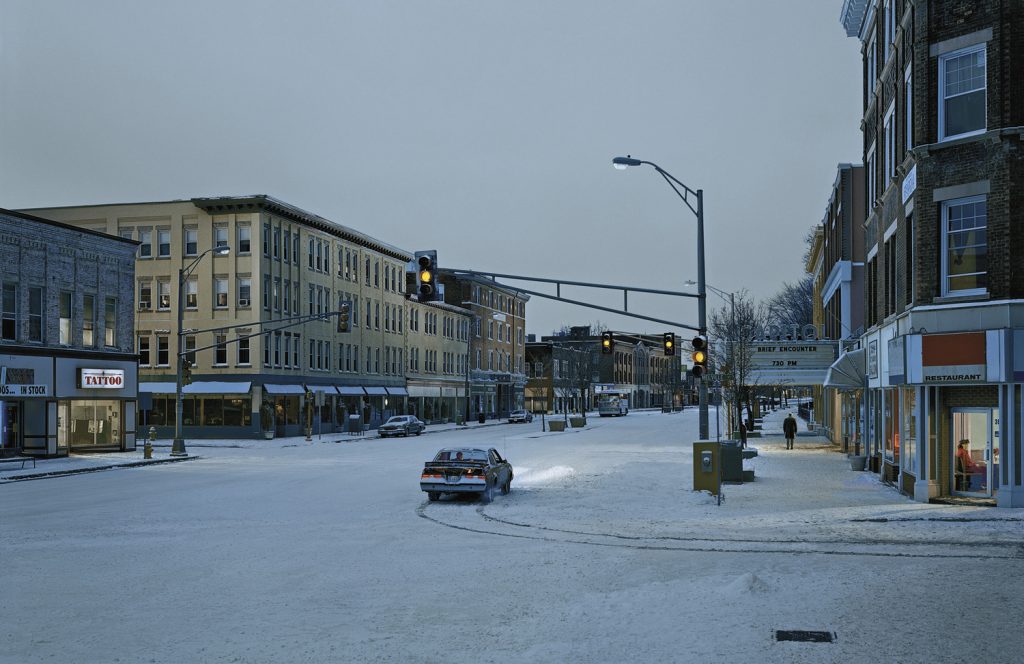
Gregory Crewdson whose tableaus have a wonderful sense of unreality and uncanny yet contain very real objects. Often set built the entire scene is entirely fictional. The location itself could actually be real but Crewdson will add trees, lamp posts and of course all of the human activity is directed.

Again quality of craft is important, it has to look real or the illusion is broken. I am researching his methods and I aim to reflect the quality of this work in my own practice.

GREGORY CREWDSON Untitled Brief Encounter 2006
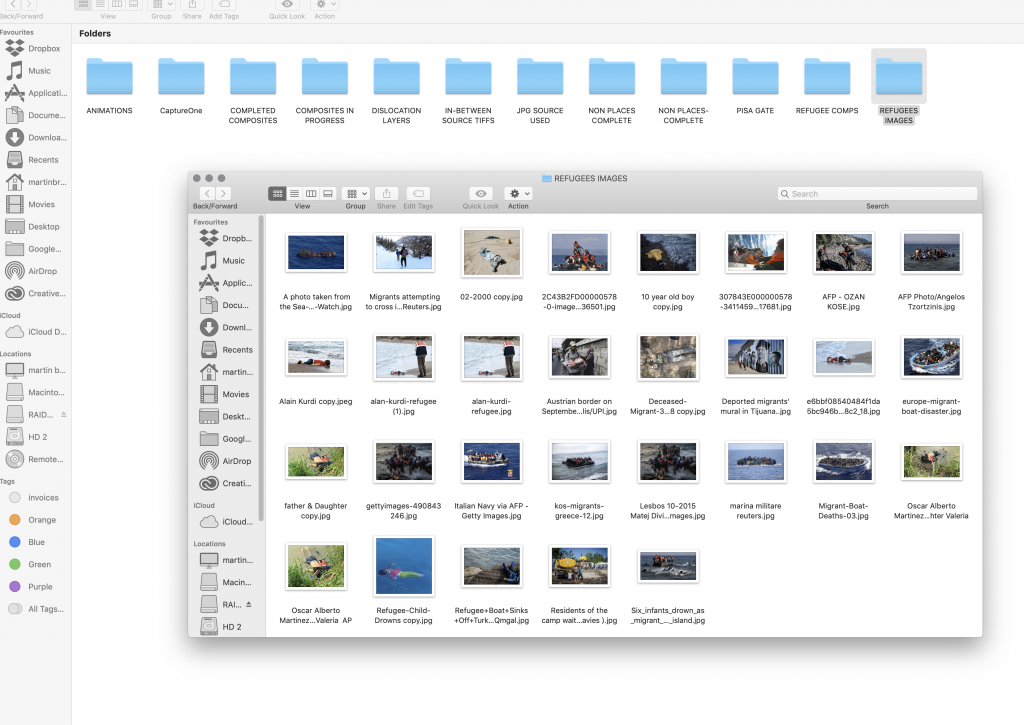
Appropriated news images ready for potential use.

Pho 703 Reflection- An Impasse

This module has proven pivotal in moving my project along.  Ive looked at different ways of presenting the images, creating the images.  Its involved exploring the moving image and the brief to create a trailer led me into looking in a less linear manner, by which I mean moving my gaze away from the tableau images of the project as they stand and onto the results of the constructions I am reimagining.

Its important the images from the project are very beautiful,  nationalism never paints a picture of things being more ugly or worse, it creates a utopian vision of ‘sunlit uplands’ all gain, no pain. 

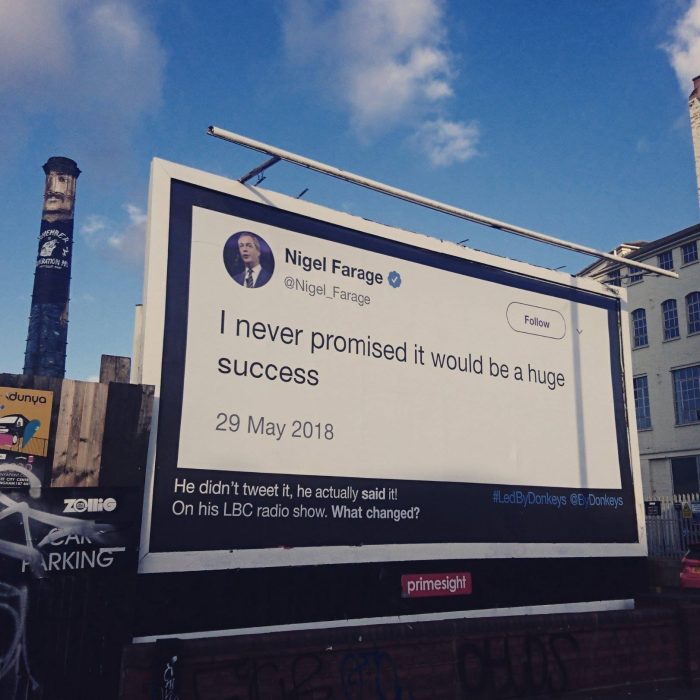
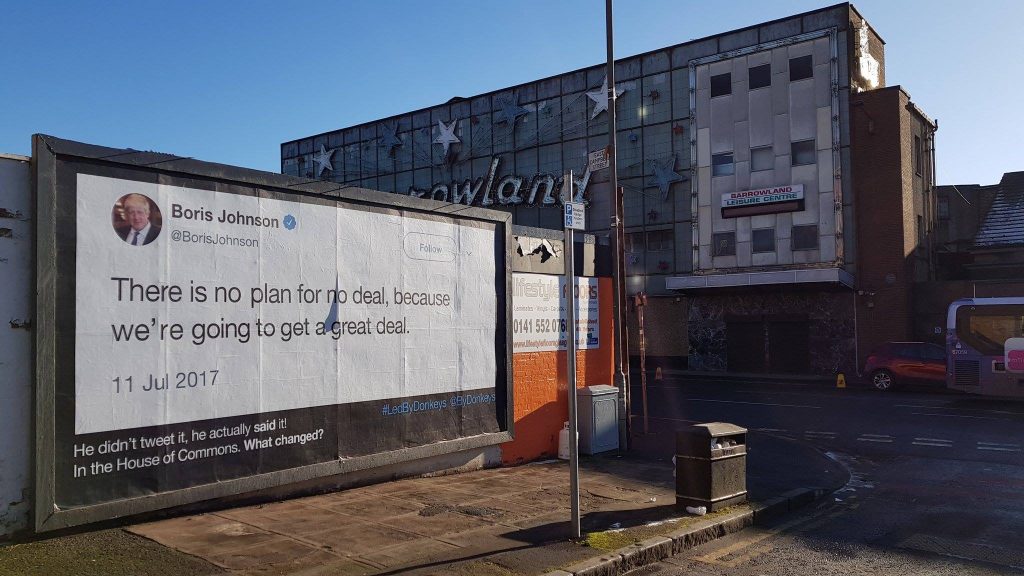
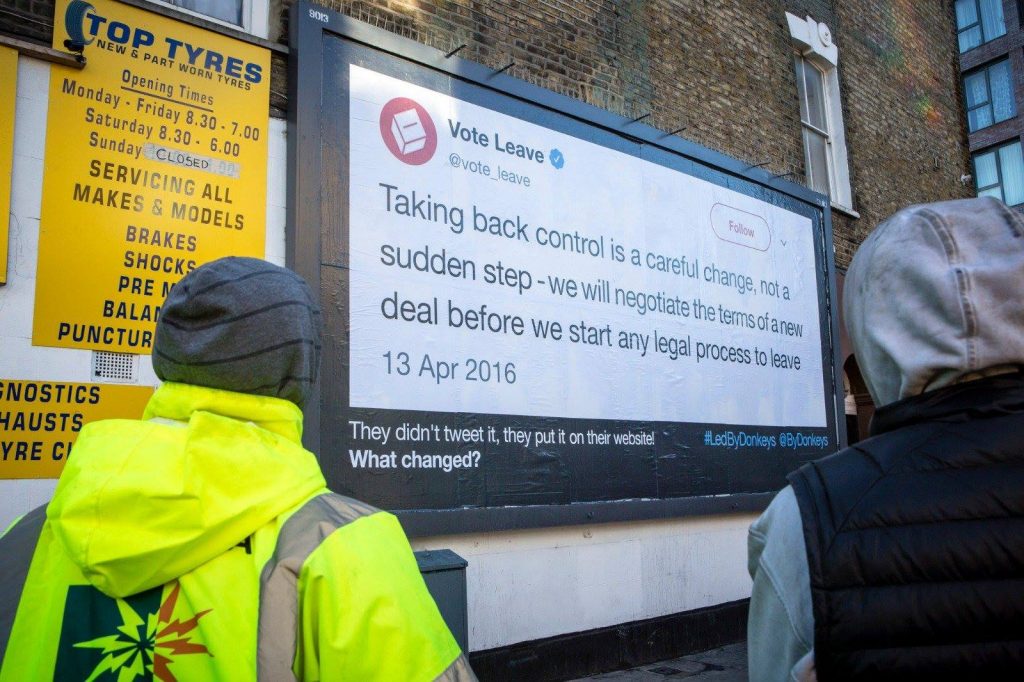
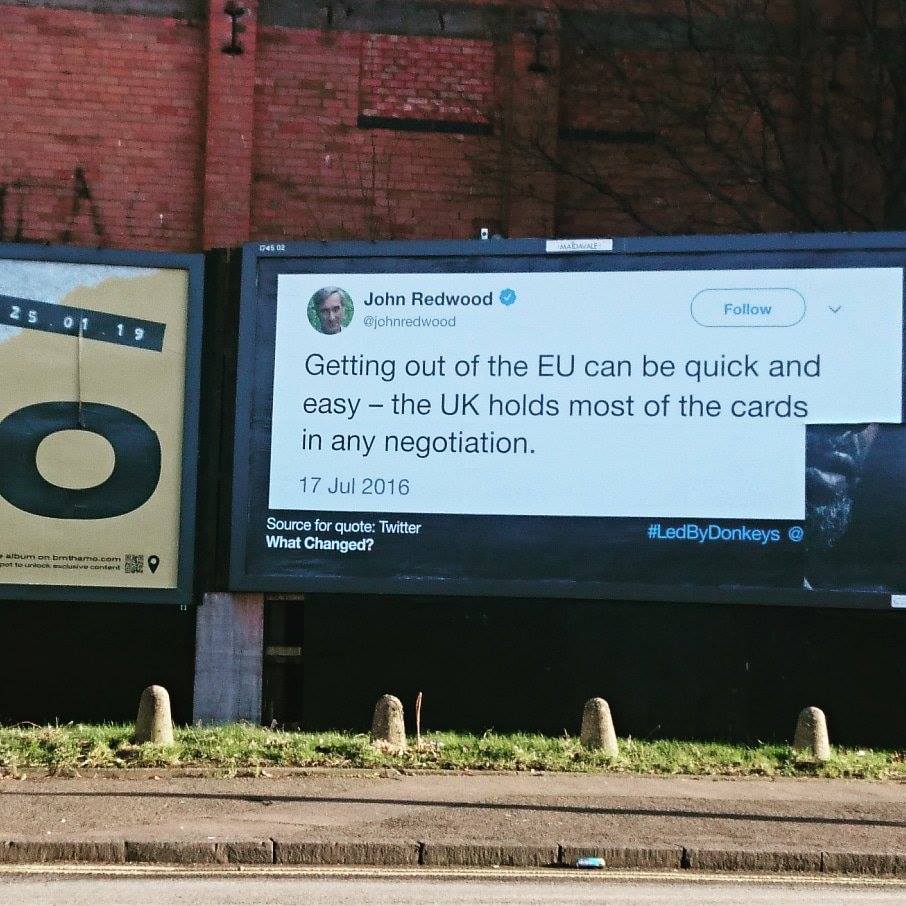
©2019 Led By Donkeys

The quotes of Brexiters claiming no harm and all gain from voting leave in stark contrast to the reality unfolding lampooned by campaigning organisation Led By Donkeys is a case in point.

Trump talks about his new wall as being ‘beautiful’ and ‘great’.   He paints an image of a better future without any downsides as has every other nationalist leader throughout history.  Hitler talked of a thousand year Reich.

So its important my images are beautiful however the results of these constructions physically and politically are far from beautiful.   The stark and ultimate reality fo those deemed unwelcome is frequently suffering and death.

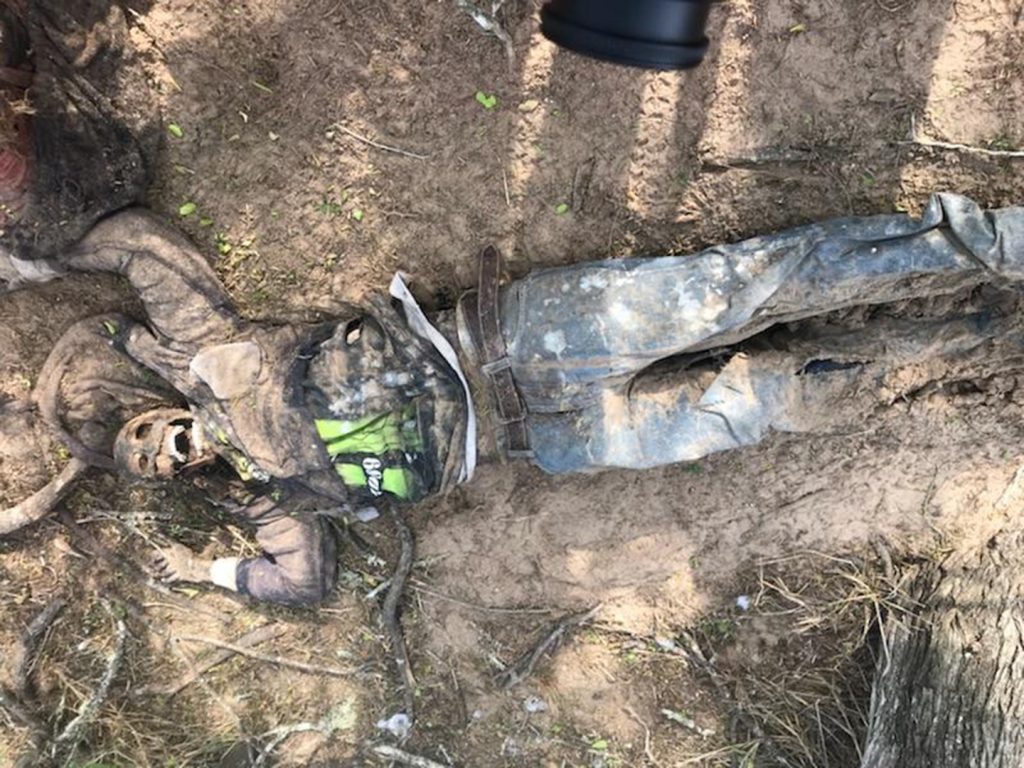
2018 New York Times Deceased-Migrant-3-Brooks-County-1-21-18

This is the ugly reality, when you build a wall someone will be worse off, it is not beautiful,  it can never be.  Its important I address the results as well as the rhetoric but the question is how to incorporate this critical aspect into the body of work?

I will need to work with found imagery, the first time I will have done this to create a new work. The images will be screen grabbed or scanned from publications so limited from the outset.  I have to be respectful to the victims, a horror show isnt my intention. The images will need to jar the flow of the main show which they cannot fail to do but it needs to be in a way that is legitimate and true to the victims and this is where I am stuck.

10 things you need to consider if you are an artist – not of the refugee and asylum seeker community- looking to work with our community.

This page from Refugees, Survivors and Ex-detainees organisation in Australia makes very important points and invites artists to interrogate their intentions and aims before featuring refugees, they shouldnt be seen as a resource or means to a career end.  I am satisfied my intention is legitimate. I didnt think ‘refugees’ great, very current and cool. my artistic journey and desire to drive awareness to their plight has led me to this point and imperative not to exploit them my current impasse.


PHO 703 Week 11: Work In Progress

“The act of photography is like going on a hunt in which photographer and camera merge into one indivisible function. This is a hunt for new states of things, situations never seen before, for the improbable, for information” (Flusser)


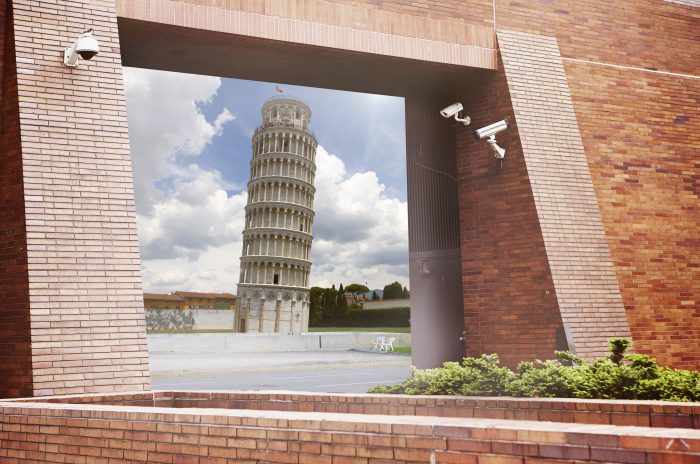
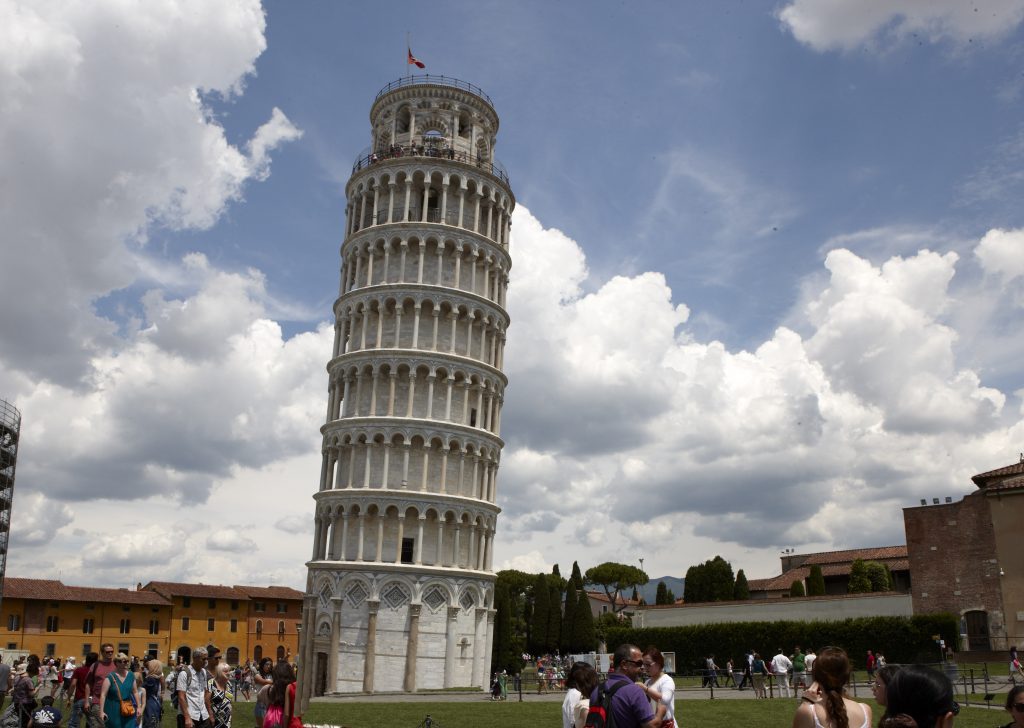
The leaning tower of Pisa, as iconically Italian as the Eiffel Tower is Parisian.
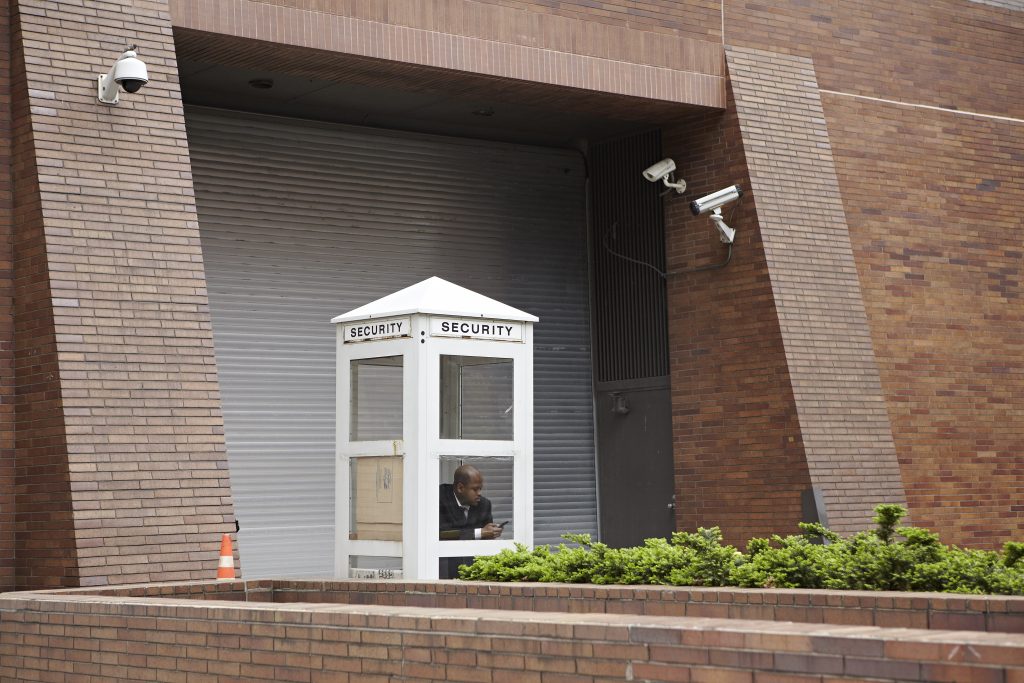
However given Italys recent shift to closing its ports to rescued refugees and a rhetoric not heard since the 1930’s I was looking for a suitable metaphor when I happened upon this security gate, actually from the financial district NYC which feels apt given the US’s recent conversion to isolatioism but it could be from anywhere.

Ugly but purposeful, tone deaf, hopelessly inappropriate and be-spoiling but effective if the viewer is blind to its sheer ugliness.

My initial starting point was with this version where I combined some construction work in progress at Nice Airport with the New York security wall, I quite liked it had zero geographical identity,  it could be anywhere, a true non place.

Below are the constituent donor images.


References: Flusser, Vilem (2000) “Towards a philosophy of photography”, Reaktion Books

PHO703- Work In Progress

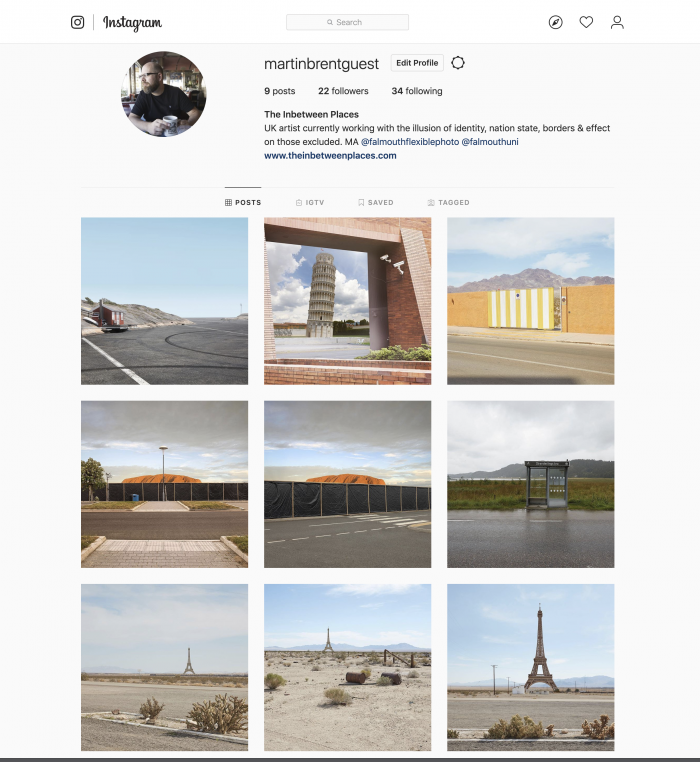
As part of the exploration as to where the images may finally be displayed I was overlooking a very simple and effective avenue.

Instagram!   So Obvious but not so obvious when you still consider the images or a project as work in progress.  Sharing an idea feels kind of risky, what if its decried as rubbish or someone steals it?

Although I wasnt able to do Landings I noted that part of the promotional requirements was an insta page  and coupled with the great success sharing my images has been in terms of developing and refining the project it gave me the confidence to get it out there.


You can find it here- https://www.instagram.com/martinbrentguest/

Pho 703 Week 9 Reflection & Observations Part 1

One of the big learning curves and discoveries for me during this module is that your art doesnt have to be printed huge and stuck to a wall in a gallery to be ‘art’.  An image can be made and displayed in a myriad of ways and indeed these methods may well contributes to the meaning behind the works and indeed be an integral part of the work itself.

My initial idea, because to be honest thats all my experience to date of looking at photography informed me to do, was to think about making big beautiful images for gallery walls,  I may still do that but I now know it doesnt have to be that way.

Ive always been attracted to the pop up exhibition idea,  shows in public spaces I believe are important and done well can bring a lot of added value outside of the aesthetic.  The Museum Quarter in Vienna does this very well using the space to not only advertise what shows are running but also the bring the shows out into the street.

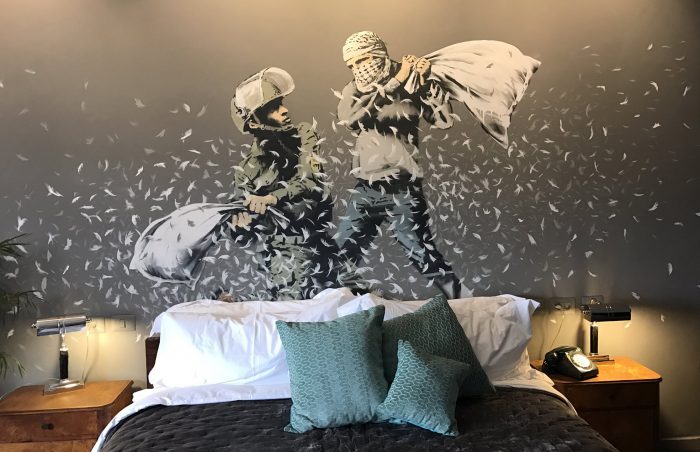
Its also very interesting when the artist uses the place as an intrinsic element in the works and I think a great example of this is in the urban art scene where many practitioners use the built environment to make their artistic statements.   Banksy notably with his work in Palestine and also with temporary shows like Dismaland which was held in Weston Super Mare at the old lido complex where he takes the concept to the maximum level bringing vast spaces into the work.

The Dismaland 'bemusement park' in Weston-super-Mare, 2015 © BANKSY.CO.UK.jpeg

The Dismaland ‘bemusement park’ in Weston-super-Mare, 2015 © BANKSY.CO.UK

Banksy says  “There aren’t many situations where a street artist is much use,” he says. “Most of my politics is for display purposes only. But in Palestine there’s a slim chance the art could have something useful to add — anything that appeals to young people, specifically young Israelis, can only help.”

'Peace on Earth', which appeared on a Bethlehem doorway this month © BANKSY.CO.UK.jpeg

Peace on Earth  © BANKSY.CO.UK


Taking the concept of public art to the logical extreme and creating an entire fully functioning hotel,  The Walled Off Hotel in Bethlehem, claiming to have the worst view in the world as its literally yards from the concrete separation wall literally dropped down the center of what was once a busting shopping street.

Wall Off Hotel Palestine MEE Sheren.jpg

Banksy’s Walled Off Hotel  (MEE/Sheren Khalel)


walledoff2.jpg

Every part of the hotel is a work of art, a gift shop called Wall Mart sells graffiti supplies and ladders to help tourists deface the separation wall.

This project also resonates with my FMP which examines the concept of borders and notions of nation state identity and its effects on those excluded by the barriers the state erects.


References

www.middleeasteye.net/news/banksys-west-bank-hotel-causes-anger-among-some-palestinians

www.channel4.com/news/banksy-opens-bethlehem-hotel

www.ft.com/content/b1e914a2-df94-11e7-a8a4-0a1e63a52f9c


Pho 703 Week 6 Reflection & Activity Models of exhibition spaces

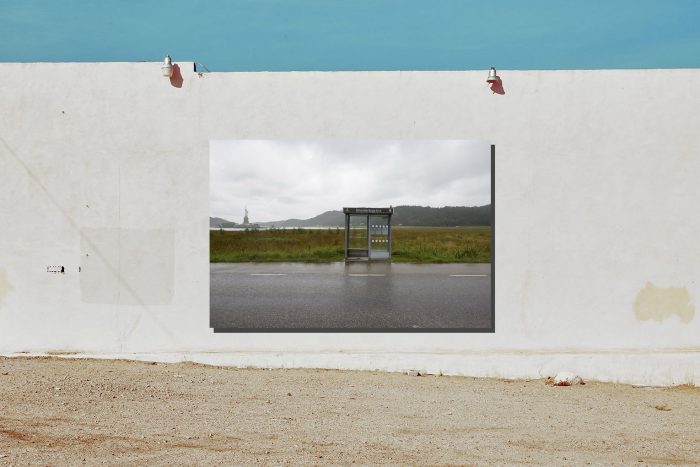
Having been somewhat released from the notion that the white wall gallery was the only way to display photography,  I may well still do this, I dont hate it, I just never considered alternatives before, what I would really like to do would be take the final images to some of the locations where one of the donor images was actually from.

The dummy publication led to a wholly unexpected outcome in that  the images actually look great as newsprint, a commercial poster print process whilst different to newsprint is equally low resolution and the paper stock albeit coated to enable some weather resistance is similar.


space 1.jpg

Space 2.jpg


For me this would be perfect, it could even be part of a public engagement experiment where I can truly test the theory about people not being able to recognise their own country when taken out of context.  However there are very obvious logistical and financial hurdles to overcome with exhibiting in this way,  realistically its probably unlikely I can do this but I am still keen on the idea of taking the images out into the world.


Another possible route could be to take images into different environments closer to home,  natural, built or both.  Rephotographing them in situ for a web based gallery or even retransmitting them via CCTV which i’m currently experimenting with now to see how viable it might be.

Spaces 3.jpg

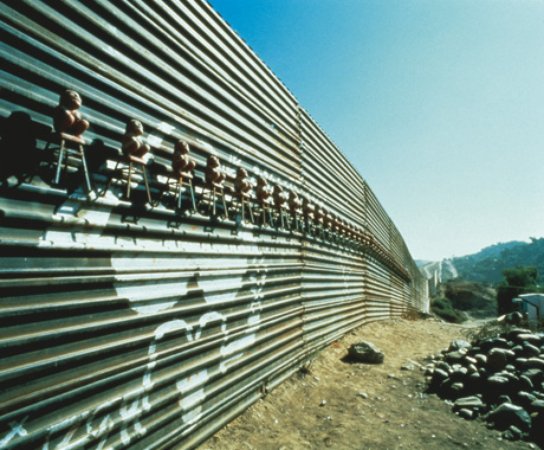
This of course is not a new idea,  inSite running in 1992, 1994, 1997, 2000–1, and 2005 ran at various sites in Tijuana, Mexico and San Diego, California

insite
inSite

Originally founded to address a perceived lack of cultural institutions in San Diego, with its second iteration in 1994, “inSITE” expanded to locations spanning the area immediately around the U.S.-Mexico border with artists including Gary Simmons, Lorna Simpson, and Nari Ward, Curated by  Jessica Bradley, Olivier Debroise, Ivo Mesquita and Sally Yard placed images and installations into the environments they aimed to confront.


Reference

https://www.artspace.com/magazine/art_101/art_market/10_exhibitions_that_have_changed_the_course_of_contemporary_art-52142


PHO 703 Week 5: Work In Progress

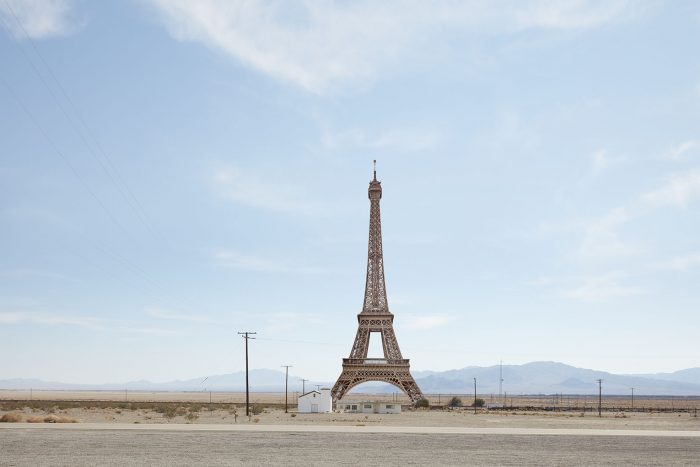
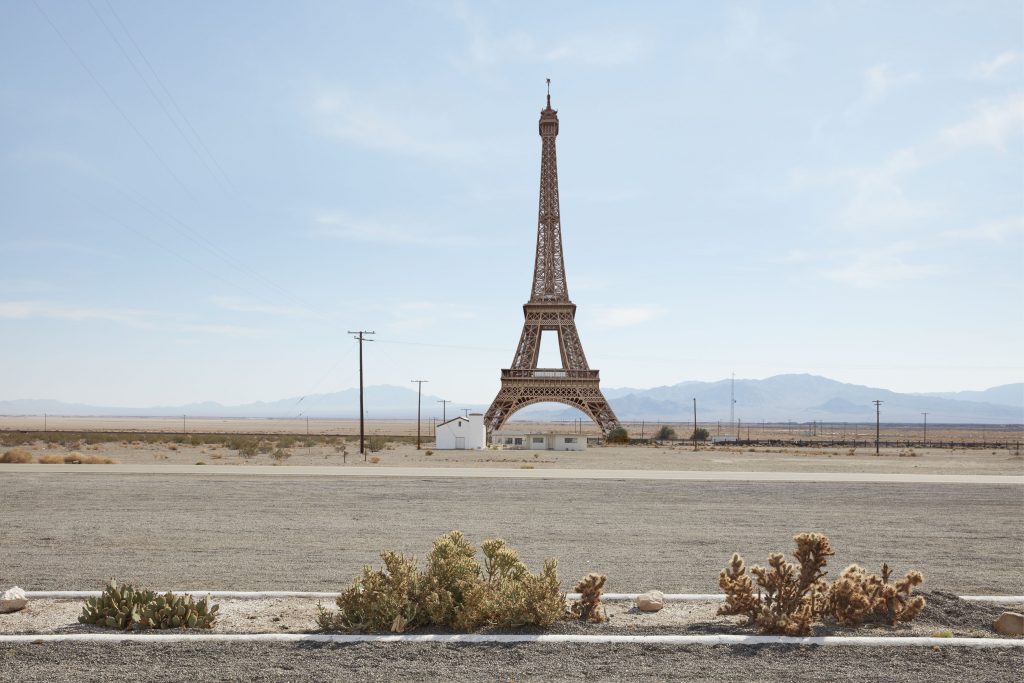
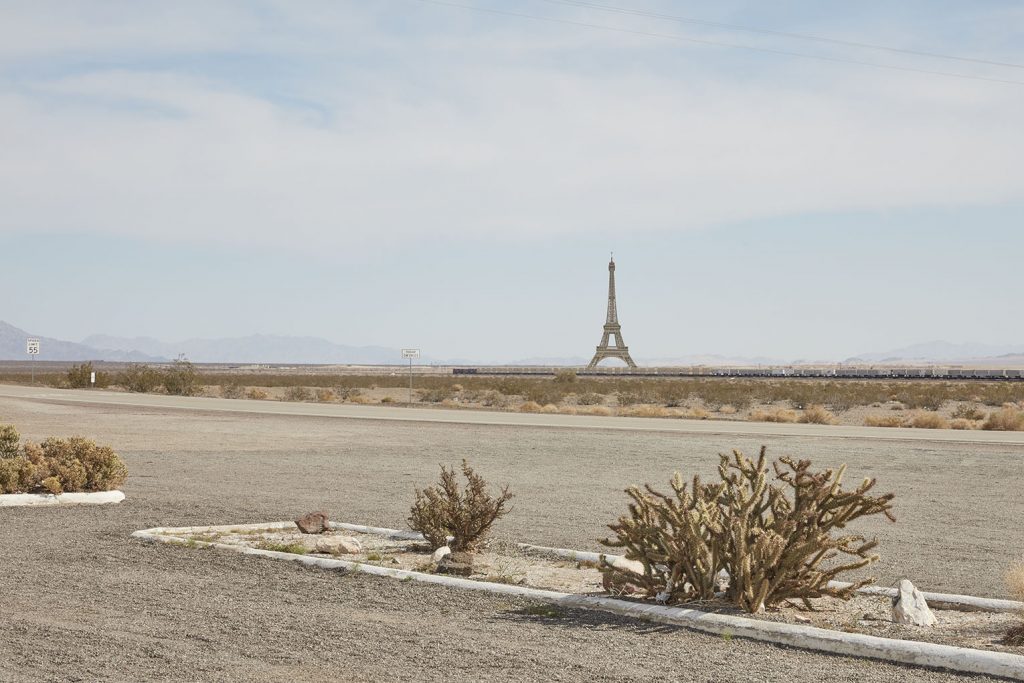
Revisiting the alternate histories strand of this project whilst in Paris I started wondering what would have become of the Eiffel Tower had it been dismantled as originally intended at the conclusion to the World Fair 1889.

Constructed from 1887 to 1889 it was initially criticised by some of France’s leading artists and intellectuals for its design, but it has become a global cultural icon of France and one of the most recognisable structures in the world. The Eiffel Tower is the most-visited paid monument in the world; 6.91 million people ascended it in 2015.

However what would have become of it had it been taken down?  In this scenario I imagine it was bought by a long defunct American corporation or wealthy individual, maybe sited along Route 66 as a tourist destination but now along with many of the motels and attractions that once lined this route, forgotten and abandoned with the coming of the Interstate.

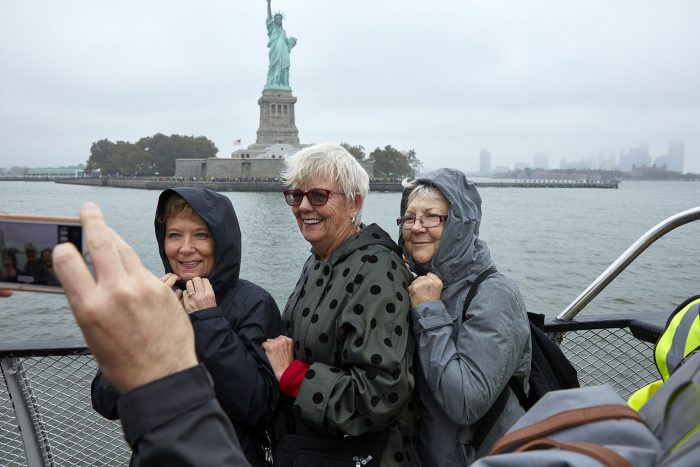
And what of Paris, would the tower have been missed?  Maybe the ‘unwanted’ Statue Of Liberty would have stood in the towers place?  Maybe it would just been mourned by an interested few who saw its potential, that it could have been the most iconically ‘French’ thing on the planet.

More importantly what would the city of Paris use in its place, what would the cities identity now be linked to?

Its not hard to imagine the image elements here so this time I have shown four alternate compositions, only one will go through to the final show collection.


Pho 703- Roadmap weeks 5 to 11

Title of Work: The Inbetweeen Places  

A study exploring the notions of self identity as a part of the nation state represented as a claim on the land itself via enclosure and exclusion of ‘others’ and that identity in relation to cultural icons that also now form part of that states identity.

Keywords: Borders, nationalism, Trump, Brexit, exclusion, refugee, migrants

Methods and Methodology:  Evolving but initially combining topographical features from one country and blending them into another. Using natural and man made features such as gates, fences and walls. Also appropriating cultural icons and transporting them into new situations suggesting alternate histories.   Also now exploring the results of the enclosure of the land on those excluded.

Im no where near ready to create final large format prints but I am very interested in exploring alternate ways of viewing such prints outside of a traditional gallery space.  To that end I aim to experiment with the retransmission of the final images via CCTV.  How this is viewed is very open to debate and practicality.  Maybe the feed would go to an IP enabled device so people could log in to view images they do security footage of their homes, the retransmitted images form a web gallery or maybe the feed simply goes directly to a TV screen.  

Number of Shoots:  Indeterminate,  Ive already created images in the UK, Americas and Europe but feel  at least three or more shoots are required ongoing to aquire suitable donor images. Since these shoots require overseas travel, time and budget are major factors and I aim to capitalise on commercial paid shoot to mitigate cost but of course we dont know what shoots will be coming in so the process will also need to be self funded and is ongoing.

For the first time I am looking at appropriating found imagery, notably news and documentary and I feel this will be an interesting activity to run as a possible workshop.

Outcome: 

To create a publication in the form of a newspaper that may go onto to accompany my final MA show.  I  want to explore the newspaper format as my project has now shifted into a semi documentary sphere as it is now making a commentary on the results of the imposition of borders, closing off and excluding those seen as ‘other’ to the society that excludes them. 

To come out with at least one main image and several supporting works towards the FMP.

To establish if there is anything to be gained in the CCTV retransmission of the project images

My ideal and desired outcome will be to challenge the common public perception that the imposition of borders is a good thing since it clearly comes at a human cost.

Results & Relationship with FMP.

The images created will contribute to the final project, not all will be selected for the final show of course and now the project has evolved into new strands its difficult to say what form a final show will now take. The initial plan was a photobook and large format print exhibition,  already I feel the photobook may become a newspaper, the traditional large format prints I would still like to pursue as the tableaus I am creating are detail heavy and lend themselves to this form of exhibition but maybe the traditional gallery isnt the best option for actual display.