‘National Geographic’ Reckons With Its Past: ‘For Decades, Our Coverage Was Racist’
Before I talk about the above quotation it would be useful to provide the question I will attempt to answer, if not all as its a huge question possibly requiring another post, at least in part
We were asked to look at how our practice may (or may not) be seen as adhering to a specific ideology. The potential impact of this given the subsequent meaning and reception your practice might attract. From whom? and finally any power negotiations within your own practice.
To answer this I think its necessary to talk a little about mass media and how it came to be a ‘thing’. My research has shown the seeds for how we consume photography on a mass level were sewn much longer ago than may be obvious starting with the ‘selfie’ culture of the 1850’s.
“Selfie culture… 1850’s?”
One of the first things I became aware of on this course, literally in the first couple of weeks, was that daguerreotypes were mass produced and very common place, as one offs I had always assumed they were few and far between, expensive and beyond the reach of the very wealthy. How wrong I was.
Invented by Louis Jacques Mande Daguerre it was the first truly commercial photographic process. Briefly the process comprised of a polished silver surface on a copper plate being sensitised. After exposing directly to the subject in a camera it was developed (by mercury vapour) The image was a one off of course, since no negative or means to reproduce it again existed, each precious in its own right
Richard Beard opened England’s first public Daguerreotype studio in March 1841 in Regent Street, London having bought the right as sole patentee of the process in England. Access to the studios of photographers working with the daguerreotype process around 1850 would have been limited to the middle and upper classes so although popular we look across the Atlantic.
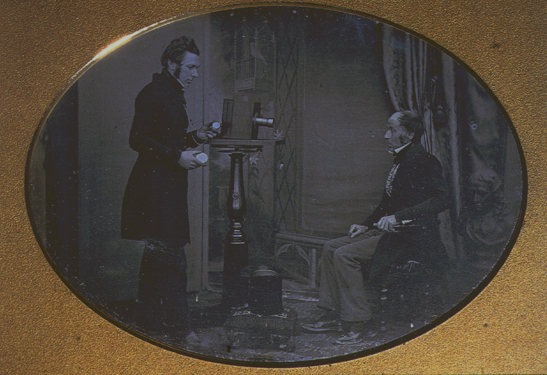 ‘Jabez Hogg and Mr. Johnson’, 1843, Richard Beard, Science Museum Group collection A daguerreotype from 1843 which is thought to be the first photograph showing a photographer at work. The image depicts Jabez Hogg photographing W.S. Johnson in the studio of Richard Beard.
In the US things were a little more democratic and manny licence holders existed some working with travelling studios touring the small towns which proved incredibly popular. by 1853, an estimated three million daguerreotypes per year were being produced. OK thats no where near the amount of images created by the public now but this is the very birth of photography, the very first commercialisation and already the public were hooked.
A little bit of a history lesson but Im getting to the point, for the first time, people could obtain an exact likeness of themselves for a modest cost. This made portrait photographs extremely popular with those of modest means. As today celebrities and everyday people sought their portraits, there was a trend for workers to have a daguerreotype taken of them, especially occupational portraits.
Fast forward to today, whats changed? Everything and nothing it seems, the second it was possible to obtain a likeness it was immensely popular with people commissioning their portrait to share socially. The accessibility and cost were the drivers and a societal expectation to share the images ensured a new image would always be needed. In todays world cost and accessibility again were the driving factors behind the explosion in selfie culture where using a smart phone its possible to easily share images on platforms like Instagram and Snapchat. The social imperative to do so immense.
My observation being people dont really change and neither has their idea of how to project their likeness on the world.
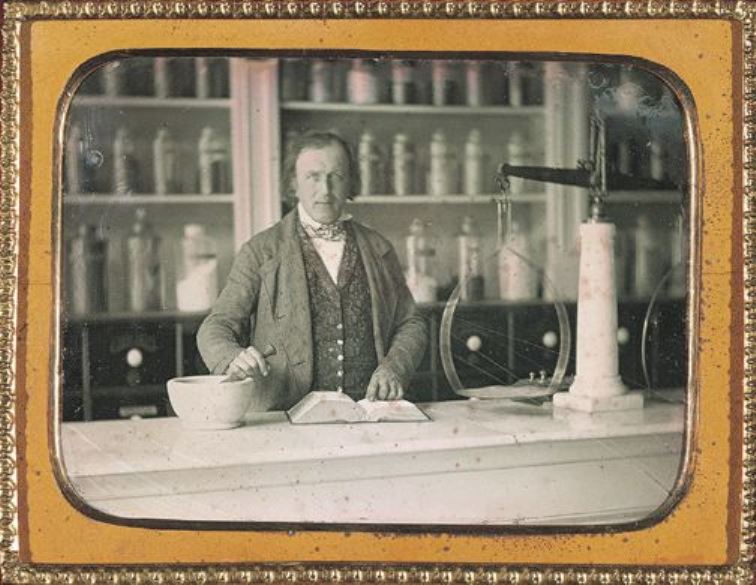
Whats the difference between this image from the 1850’s of a chemist in his place of work to this image of a photographer, ok me, on set of an advertising shoot in 2015 which was shared on Instagram?
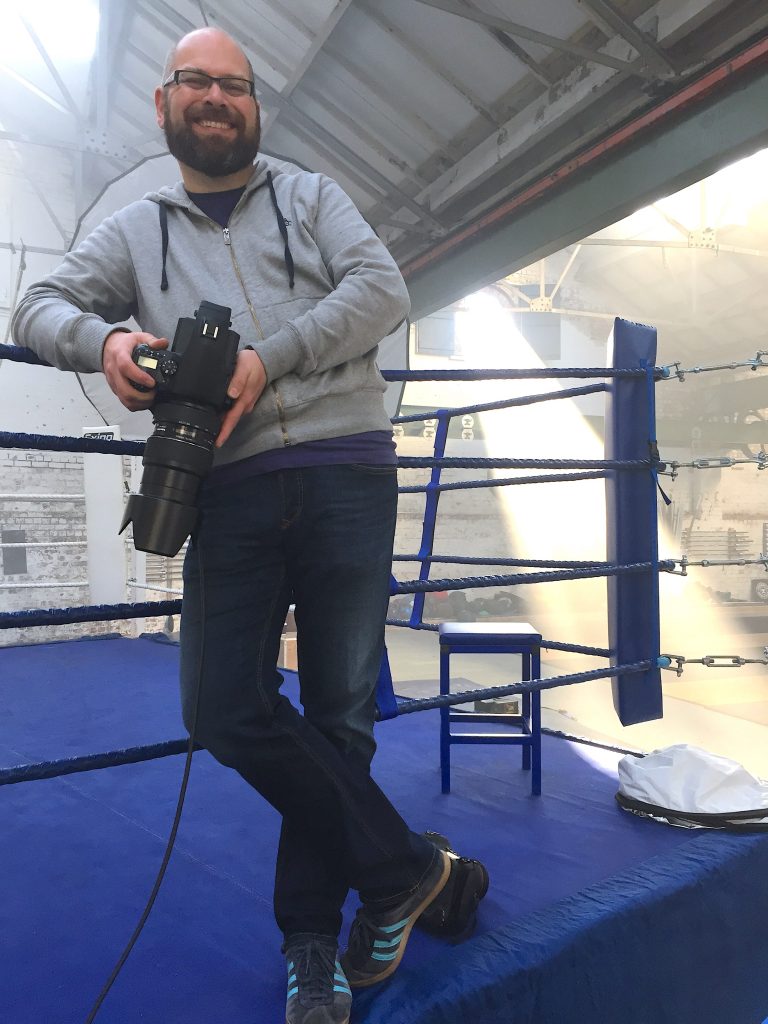
Apart from the informality that the technology of today allows theres no difference in content nor the desire to describe our place in the world at that given point. I may be self deprecating when I describe my hideous self in these kinds of images but I am proud that I got to do what I studied and worked hard to achieve and the chemist would also be motivated by the same emotions.
This is a very long introduction to discussing how peoples ideas of photography have changed over time. In terms of the portrait of ones self then apart from means of capture and transmission then I would put forward that nothing has really changed, the content and formality aside. What would be considered acceptable content to include in a publicly accessible image back in he early days of commercial photography to now are clearly very different and I believe this is also reflected in the content we generate as practitioners as we are in turn influenced and influencers of societal and cultural changes.
By changes I suggest a better description would be education as our understanding and empathy with the other humans we share our world with increases (or doesn’t, or is subverted)
For instance National Geographic Magazine.
Catherine Lutz says she “devoured every issue. It was this beautiful and exciting set of pictures and stories.” She even credits National Geographic with inspiring her to pursue a career in anthropology.
“It stood for science, It stood for education. It was used prolifically in schools. It also stood, though, for a kind of white view of the world.”
The mandate from Gilbert H. Grosvenor, one of the magazine’s earliest editors was print nothing “controversial” or “unpleasant.” but thats where the problem starts because to judge if something is unpleasant requires the image to be compared to a set of values and the values of the person doing the assessment are the crux.
Lutz who co-wrote the critique ‘Reading National Geographic’ in 1993 goes on to say
“It’s an ideal world,” she says of the magazine’s coverage. “It’s safe, and it’s basically free of problems. Just lots and lots of smiles.”
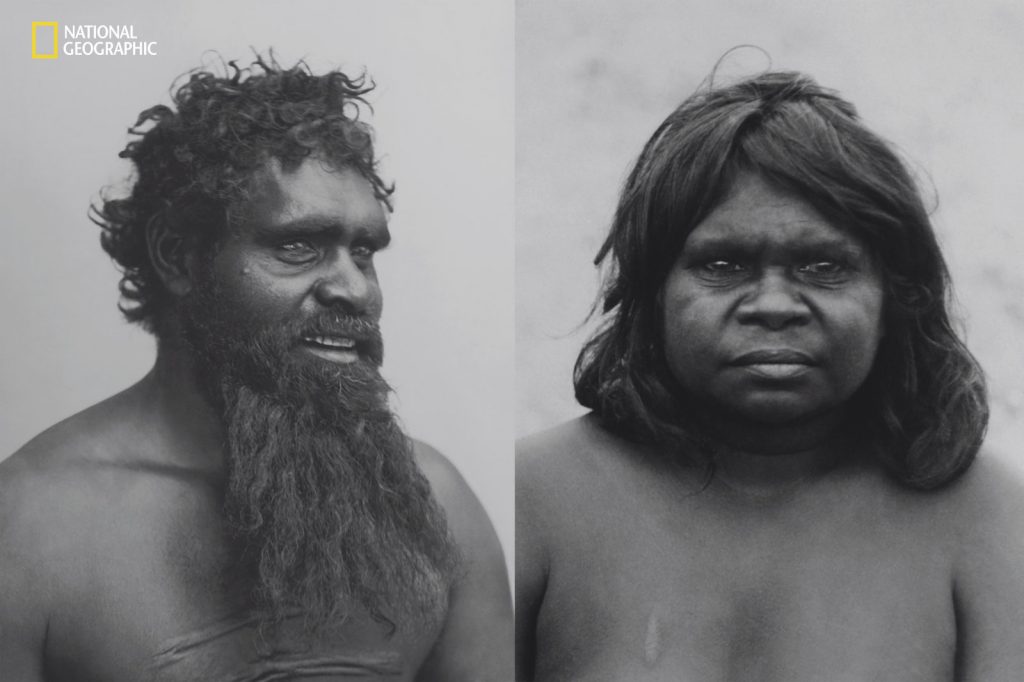
C.P. Scott (L) and H.E. Gregory (R)/National Geographic
Take the above images, as a younger man I would not have given them much thought, the wording I would have without doubt but without that I would have viewed these images passively.
Now I find them exploitative, I understand more about how Aboriginal people were persecuted and I now see the images not just as holding up people who are different but also creating a difference, ie these people are not equal, almost as objects to be evaluated, not people. I dont like it. I look at their expressions and I dont see happy people, they look disempowered.
John Edwin Mason, professor of African history and the history of photography when asked by Editor In Chief Susan Goldberg to examine the Nat Geo Archive reported back
“The photography, like the articles, didn’t simply emphasise difference, but made difference … very exotic, very strange, and put difference into a hierarchy,”
“And that hierarchy was very clear: that the West, and especially the English-speaking world, was at the top of the hierarchy. And black and brown people were somewhere underneath.”
“Teenage boys could always rely, in the ’50s and ’60s, on National Geographic to show them bare-breasted women as long as the women had brown or black skin,” Mason says. “I think the editors understood this was frankly a selling point to its male readers. Some of the bare-breasted young women are shot in a way that almost resembles glamour shots.”
Its an uncomfortable truth because we have all looked through those pages contemplating the exotic and far away places without giving much thought to those depicted.
Mason offers some comfort
“We’re all curious and we all want to see. I’m not criticising the idea of being curious about the world. It’s just the other messages that are sent–that it’s not just difference, but inferiority and superiority.”
Goldberg states “Unlike magazines such as Life, National Geographic did little to push its readers beyond the stereotypes ingrained in white American culture,” its also worth noting that she is the first woman and first Jewish person to hold the Editor In Chief position.
“two groups that also once faced discrimination here.”
Mason notes that even though the magazine’s images have been blatantly racist or skewed reality a number of African photographers have told him that it was publications like National Geographic and Life that inspired them to pursue photography in the first place..
“They knew that there were problems with the way that they and their people were being represented,” he says. “And yet the photography was often spectacularly good, it was really inviting, and it carried this power. And as young people, these men and women said, I want to do that. I want to make pictures like that.”
So how does this feed into my practice, has this informed my image making. Everytime I press the shutter release I contemplate the the potential impact and what the subsequent meaning and reception my images might receive not just from my audience of this moment, largely photography enthusiasts and largely discerning but also a wider audience in the future. That wasnt always the case though.
As a photographer who travels this is a very real concern, I shoot a lot of street imagery and also portraits of people I find interesting. Does the fact I find them interesting because essentially theyre different to me and my culture automatically put me on the backfoot?
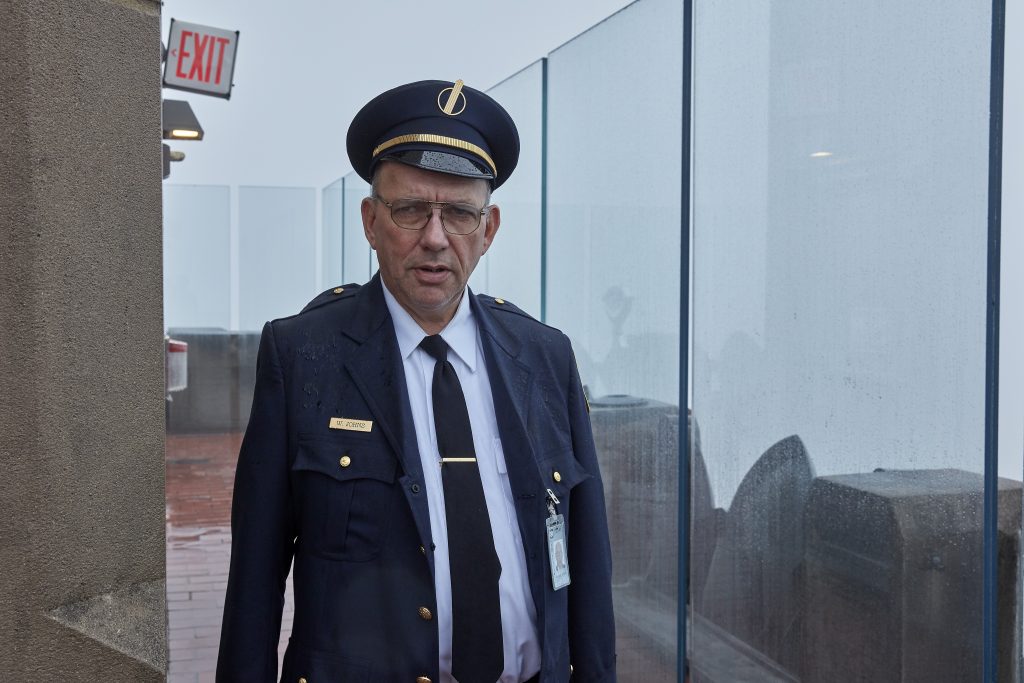
The portrait above was taken on the roof of the Rockefeller Centres roof, the weather was dreadful, torrents of rain, I spotted this guy was the only security guard without a rain cape, I asked if I could take his image “looking like this?” he asked. I commented on his lack of weather protection and he advised he’d only been in the job for two weeks. Its not the worlds greatest portrait but it was an equitable exchange.

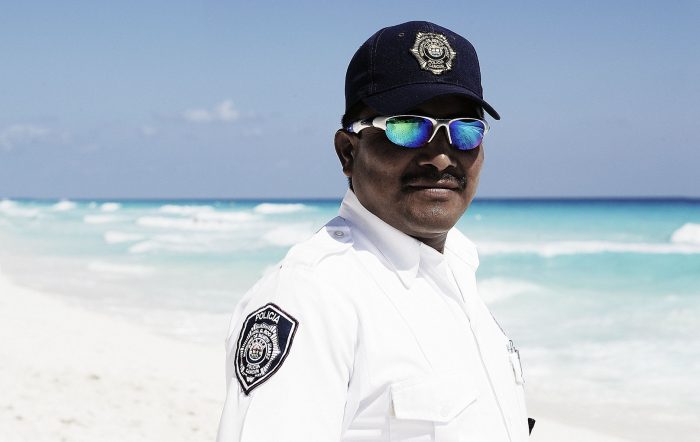
This image taken in Cancun Mexico, again an equitable exchange, I loved his blue Oakley sunglasses echoed and reflected the blue of the ocean, his white shirt the sand of the beach, the beach cop was literally the beach.
Either of the above images I am happy with, they were taken in a fair exchange of understanding, entirely voluntarily, I feel the images are honest representations of reality on that day for that person.
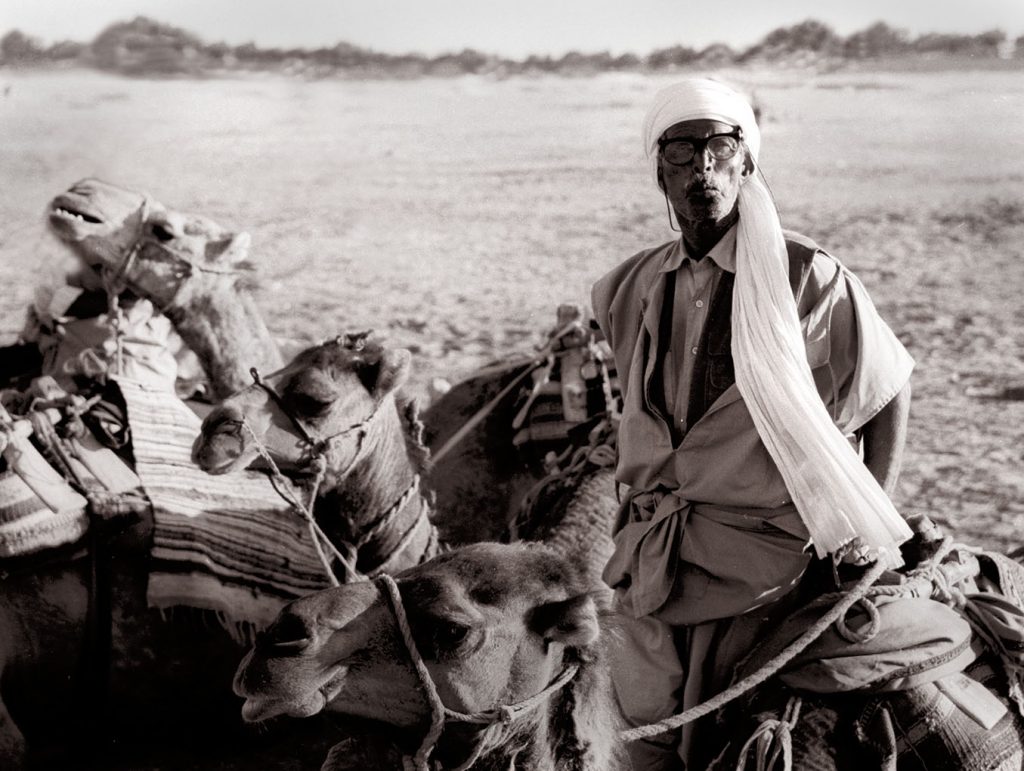
However the above image that I was quite happy with at the time I now feel very bad about, The image is of a camel trader at what was an illegal camel auction, I didnt understand at the time but the government of that country wished to ‘modernise’ the country and had banned many traditional practices including this market. I had been despatched there by a tour operator and I was just looking for ‘cool images’ I wandered around the auction, most people were really good natured, I didnt feel like I was intruding, it was all quite scruffy though, too many buildings and nt enough desert then I saw this guy and raised my camera, he noticed and wasnt happy. I could see that but took the shot anyway. This image is exploitive in the same way the Nat Geo images are, I have cast this guy in a role, theres no equity here and he’s clearly not even happy about me taking his image. Apart from my bad manners I now I realise he could have been very worried that the photographs could be used against him. I just wanted ‘Arab’ and camels to tick that stereotypical box and please my client.
“Garry Winogrand was famous for never asking people permission before taking their photographs;” writes Caille Millner in a review of the photographer’s current retrospective at SFMoMA, “a whole generation of male photographers idolized him for shooting however he wanted, whenever he wanted.”
Will the way we view his images change? Millner writing in The San Francisco Chronicle certainly seems to think soas he describes what he calls Winogrands uneasy eye.
However I don’t think it’s necessary to ask permission every time you photograph someone on the street, candid street photography is as old as photography itself and provides an important historical record as well as insight into everyday lives. Where it becomes grey or plain disrespectful is when the subject has had their equity removed, their dignity or exposed in such a way its obvious they would not be comfortable and I think it is this that Milner refers to.
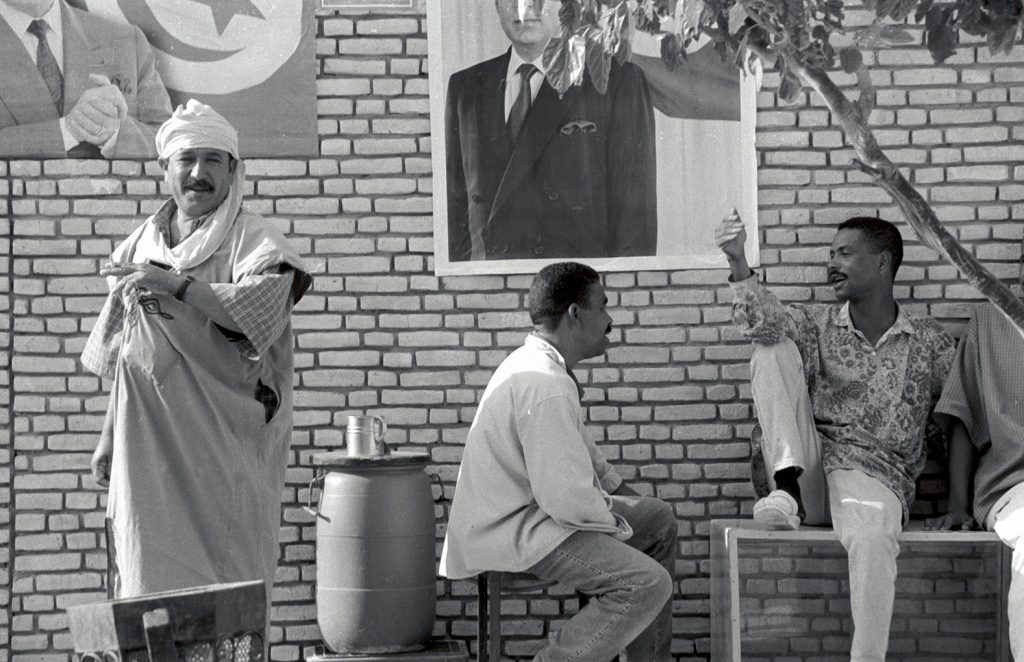
This was the reality of the region I was visiting, a diverse population, lots of brick built buildings, this shot I had permission for, clearly this was never going to sell trips to the Sahara but I like it. Note the posters of the General in charge of the country at that time, ever watchful, I cut his gaze out of frame purposefully.
I dont think my practice obviously adheres or could be seen as adhering to any particular ideology, I do try my best to avoid that but I guess the only way is to ask the audience what they see. However its inescapable that we all have many things we believe in, have issues with, approve or dont approve of. Our personal ideology.
Joerg Colberg reminds us “We all cling to our belief systems, to the many positions we hold dear, the many things we believe in — our personal ideology. It is very hard to look at a photograph without bringing it to the table, and we consider what is in front of our eyes using this very specific angle. This is, after all, what it means to be human. We have opinions”
“If there’s ideology in photographs, it’s because we put it there, less so because someone else did”
Most importantly I think how we read a photograph tells us about ourselves, looking at how you have viewed images and taken images at different stages of your life tells us that this is a fluid situation. We gain understanding by being better educated, socially literate, more aware of the greater world. Visually we hope more literate.
We build on our life experience and our empathy should grow as a result. Society should progress as a mass and as it does we develop and inform our gaze. (this can work in both a positive and negative way).
Bibliogaphy
www.blog.scienceandmediamuseum.org.uk/find-out-when-a-photo-was-taken-identify-daguerreotype-photography/
www.civilwartalk.com/threads/before-the-uniform-more-occupational-photographs.120375/
www.npr.org/2018/03/21/594895122/national-geographic-turns-the-lens-on-its-own-racist-history?t=1552664464817
www.npr.org/sections/thetwo-way/2018/03/12/592982327/national-geographic-reckons-with-its-past-for-decades-our-coverage-was-racist
http://www.cphmag.com/photography-ideology/
www.sfchronicle.com/art/article/Garry-Winogrand-s-uneasy-eye-4377685.php