What is real? When you look at an image, digitally on screen or physically as a photograph it already isnt the real subject. Its a representation of that subject so the image is already a step away from reality. Putting this aside and concentrating purely on the content of the image, is what you’re seeing the reality of the situation depicted, an edited sample of a wider scene, a manipulated image or wholly synthetic as in the case of CGI?
Even a straight image shot on film and contact printed will only be a representation of the scene as the photographer made choices at the capture stage, chose a film stock and the chemical process also introduced variables, Gary Winogrand said “I photograph to see what the world looks like photographed” so for this reason I do strongly believe an apparently photographic image does demand more careful evaluation than a water colour for instance.
When viewing a drawing or painting it is already assumed and accepted artistic licence exists, what we’re seeing isnt a literal ‘copy’ of the subject at that time, indeed the scene may exist in no other place than the artists imagination. The same can be said of CGI imagery, although generally speaking it is photo realistic (theres an irony in here somewhere) the image is purely data, literally 1’s and 0’s. no more. We view it as a photograph and make judgements based on our experience of reality and also sub consciously how an image is “supposed’ to look in a photograph even though it may not be ‘technically’ correct,
When viewing actual photographic images we apply the same filters, primarily unconsciously using our knowledge of reality, our gut feeling and also as practitioners of photography our expert eye to test the voracity of what we see. Arnheim bases his argument on the “mechanical” origin of photographic images “All I have said derives ultimately from the fundamental peculiarity of the photographic medium: the physical objects themselves print their image by means of the optical and chemical action of light”
Curiously the more mundane and seemingly everyday an image the less scrutiny it is likely to garner whereas an image of an unusual event or something out of the ordinary, ie the photographs of the Jets hitting the Twin Towers on 9/11 received extraordinary scrutiny yet were essentially everyday snapshots taken from street level as the same views had been taken a million times before. The unique and terrifying events recorded in this instance seemed to demand a higher level of proberty than had the snapshot simply been of the twin towers on any other day prior to the attack.
Again Arnheim says “Because of this fundamental peculiarity, photographs have an authenticity from which painting is barred by birth” In looking at photographs, “we are on vacation from artifice. We expect to find a certain “documentary value in photographs, and toward this end we ask certain documentary questions”
“Is it authentic? Is it correct? and Is true?”
I think these are valid and important questions. When we see images published should we assume they are true depictions? I believe we should not.
This image was supplied to a number of retouchers across the globe who were asked to retouch the image to suit their regional expectation for body shape, skin tone etc etc. The image below is the model as shot, no retouching has been done.

The images below are the variations produced. Same girl, same source image. Clearly not only ha the body shape been radcally altered, weight has been added or reduced, the BMI on the thinnest was around 17, literally a starvation level. The hair again has been altered. Looking at the side by side the differences are obvious. Displayed individually in the context of a social media roll theres no way of knowing theyre utterly fake.
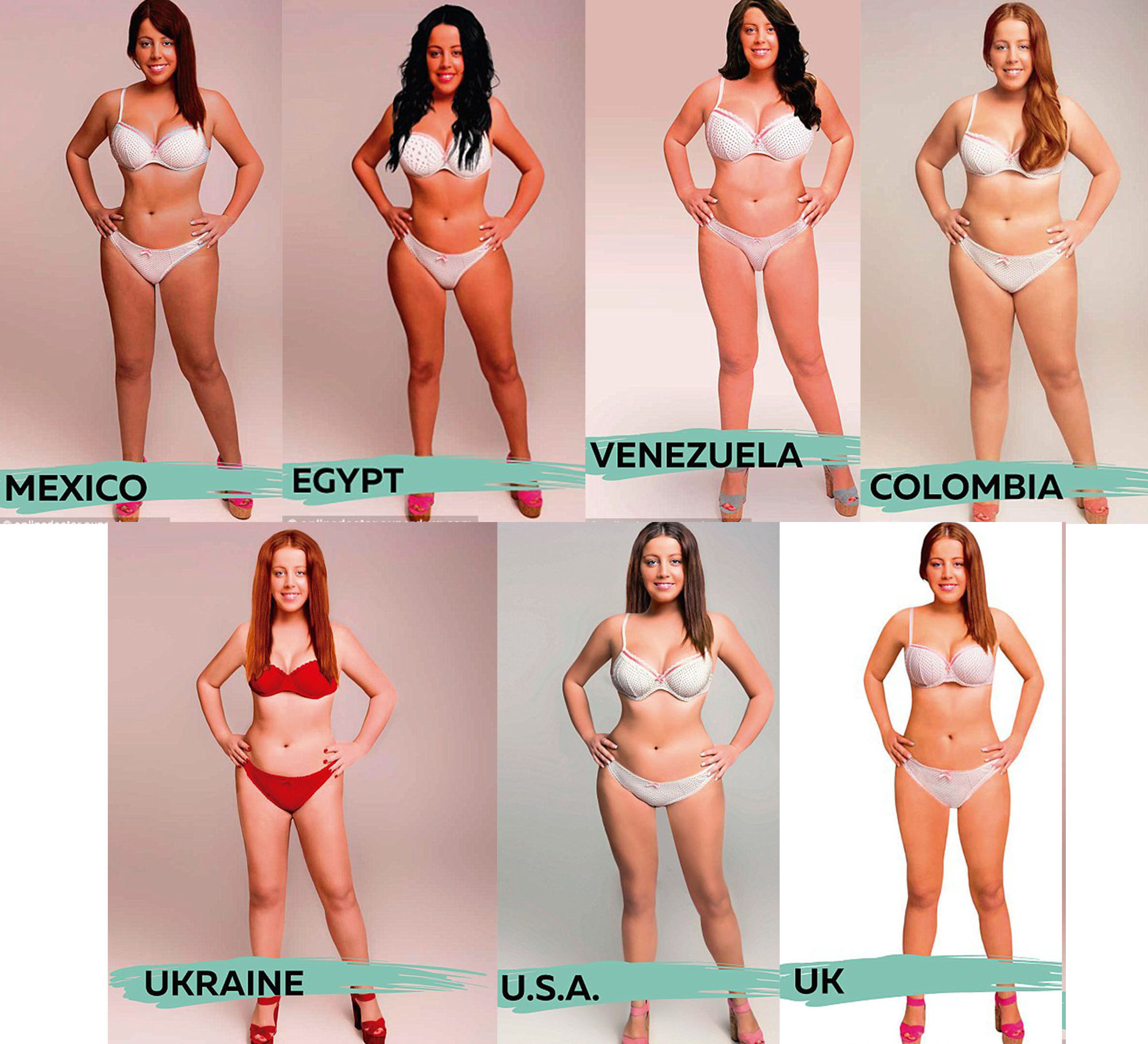
Looking at popular culture there is a great deal of emphasis on self/body image, never before have so many individuals felt the need or had the ability to display photographic depictions of themselves for strangers consumption. This obviously is aided by the simple process of being able to publish a digital image from a smart phone and the social expectations that have grown out of image sharing platforms like Instagram. However when viewing these images it is important that critical standards are applied and I feel it is now more important than ever that the young in society are equipped with the tools if not to readily spot a fake, certainly to question an images authenticity as a default position which brings us full circle from Fox Talbots declaration that “By optical and chemical means alone the image is impressed by Nature’s hand”.
References:
Photography, Vision & Representation. Snyder & Allen (1975
https://petapixel.com/2015/08/15/one-woman-photoshopped-by-18-countries-beauty-standards-revealed/